

20gp 40hc rail container shipping quote helps importers understand the cost differences between standard and high-cube containers when using international rail freight services. For businesses shipping goods from China to global markets, selecting the right container type directly affects transportation costs, cargo safety, and overall logistics efficiency.
However, many companies struggle to estimate rail container costs because freight rates depend on multiple factors, including shipping routes, cargo volume, terminal charges, customs requirements, and inland transportation. Moreover, choosing an unsuitable container size can create unnecessary expenses or capacity problems.
Therefore, understanding how 20GP and 40HC rail container pricing works allows businesses to make better shipping decisions. This guide explains container differences, quotation factors, common routes, real shipping examples, and how to request an accurate rail freight quotation.

How Does a 20GP 40HC Rail Container Shipping Quote Work?
A 20GP 40HC rail container shipping quote is usually calculated based on the container type, transportation route, cargo details, and required services. Unlike simple freight pricing, rail container quotations normally include multiple cost components.
Main Components of a Rail Container Quote
| Quote Element | Description |
|---|---|
| Rail Freight Charge | Cost for international rail transportation |
| Container Fee | Cost related to container usage |
| Terminal Handling | Loading, unloading, and handling charges |
| Customs Service | Export and import clearance support |
| Inland Trucking | Pickup and final delivery costs |
| Documentation Fee | Transport and customs paperwork |
Furthermore, the final quotation may change depending on market conditions. For example, peak seasons, railway capacity shortages, or terminal congestion can influence available container rates.
Information Required for Accurate Pricing
To receive a reliable rail container quote, businesses should provide:
- Cargo type
- Cargo weight and volume
- Container preference
- Origin location
- Destination location
- Delivery requirements
- Incoterms
Additionally, providing complete shipment details helps freight providers avoid unexpected additional charges during transportation.
What Is the Difference Between 20GP and 40HC Rail Containers?
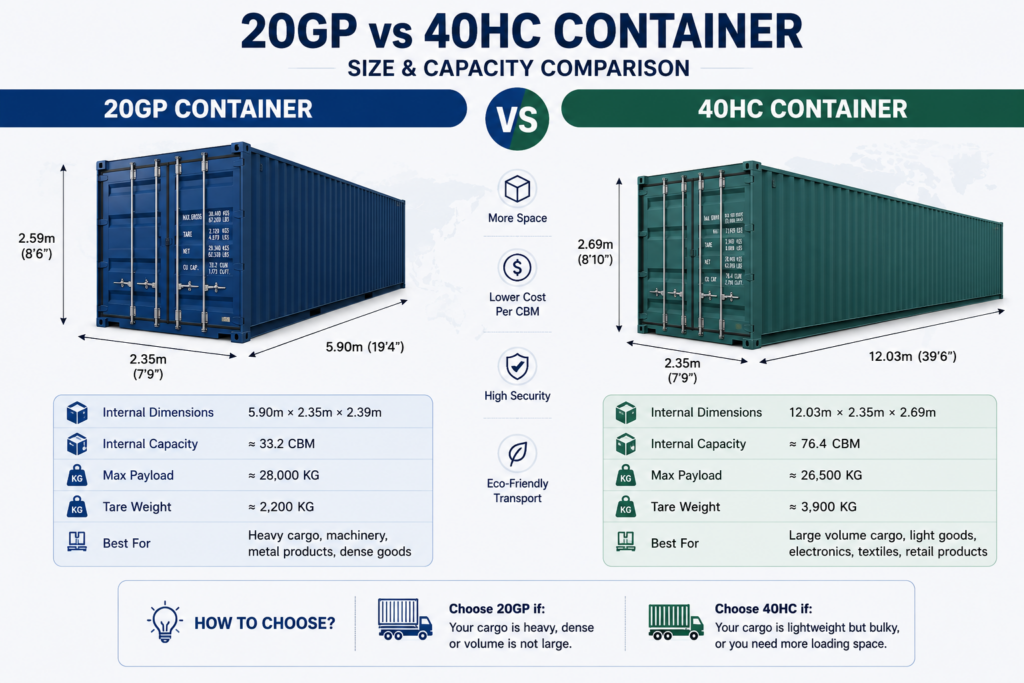
Choosing between a 20GP and 40HC container depends mainly on cargo weight, volume, and transportation requirements.
20GP vs 40HC Container Comparison
| Container Type | Internal Capacity | Suitable Cargo |
|---|---|---|
| 20GP | About 33 CBM | Heavy machinery, dense cargo, industrial products |
| 40HC | About 76 CBM | Large-volume goods, consumer products, lightweight cargo |
A 20GP container is usually preferred for heavy shipments because it has a lower volume capacity but can efficiently handle high-density cargo.
Meanwhile, a 40HC container provides significantly more space and is commonly selected for products requiring more loading volume.
How to Choose the Right Container?
Choose a 20GP container when:
- Cargo weight is the main concern.
- Goods are dense or heavy.
- Shipment volume is relatively small.
Choose a 40HC container when:
- Cargo requires more space.
- Products are lightweight but bulky.
- Maximizing container capacity is important.
Moreover, selecting the correct container size can reduce logistics costs by avoiding unused space or additional container requirements.
How Much Does a 20GP 40HC Rail Container Shipping Quote Cost?
The price of rail container shipping varies depending on the route, destination, container type, and additional services required.
Therefore, businesses should not rely on a fixed price because international rail freight rates change regularly.
Estimated Rail Container Cost Structure
| Service | Estimated Cost Range |
|---|---|
| Rail Freight | $2,000–$8,000 |
| Terminal Handling | $200–$800 |
| Customs Service | $100–$500 |
| Inland Trucking | $300–$2,000 |
Factors Affecting Container Shipping Prices
| Factor | Impact on Cost |
|---|---|
| Transportation Distance | High |
| Container Availability | High |
| Cargo Weight | Medium–High |
| Destination Country | High |
| Customs Requirements | Medium |
| Seasonal Demand | Medium |
Moreover, a 40HC container does not always cost twice as much as a 20GP container. The final price depends on route availability and railway pricing structures.
Need an Accurate Rail Container Price?
Provide your container type, cargo details, and destination to receive a customized rail freight quotation.
What Factors Affect Rail Container Shipping Prices?
Rail container pricing is influenced by both international transportation conditions and shipment-specific requirements.
Major Pricing Factors
| Factor | Explanation |
|---|---|
| Rail Route | Longer routes usually increase transportation costs |
| Container Supply | Limited availability can increase prices |
| Terminal Location | Remote terminals may require additional inland transport |
| Customs Process | Complex procedures may increase service fees |
| Cargo Requirements | Special handling may affect pricing |
Furthermore, different railway corridors have different pricing structures.
For example, China-Europe rail routes may have different costs compared with China-Central Asia routes because of distance, border procedures, and transportation infrastructure.
Hidden Costs Businesses Should Consider
Importers should also check:
- Storage fees
- Container waiting charges
- Border handling costs
- Additional trucking charges
Therefore, requesting a detailed quotation breakdown helps businesses avoid unexpected logistics expenses.
Which Routes Need 20GP and 40HC Rail Containers?
Rail container shipping is widely used on international trade routes where companies need faster transportation than ocean freight while maintaining better costs than air shipping.
Common Rail Container Routes
| Route | Average Transit Time | Common Container Choice |
|---|---|---|
| China → Europe | 15–25 Days | 40HC for consumer goods |
| China → Central Asia | 7–18 Days | 20GP for industrial cargo |
| China → Russia | 12–25 Days | 20GP and 40HC |
| China → Middle Asia Markets | 10–20 Days | Flexible selection |
Moreover, route selection depends on cargo characteristics and delivery requirements.
Typical Cargo Examples
| Cargo Type | Recommended Container |
|---|---|
| Machinery Parts | 20GP |
| Electronics | 40HC |
| Automotive Components | 20GP/40HC |
| Consumer Goods | 40HC |
| Industrial Materials | 20GP |
Additionally, combining rail transportation with trucking services can provide complete door-to-door delivery.
Real 20GP 40HC Rail Container Shipping Quote Cases
Machinery Shipment Using 20GP Rail Container
| Item | Details |
|---|---|
| Origin & Destination | Qingdao, China → Almaty, Kazakhstan |
| Cargo | Industrial Machinery Parts |
| Container Type | 20GP Container |
| Transit Time | 14 Days |
| Cost | Approximately $4,800 |
| Transportation Method | Rail Freight + Local Truck Delivery |
| Customs Clearance Details | HS codes and commercial documents verified before departure |
| Overview | A machinery supplier needed reliable transportation for heavy components. The 20GP container provided enough capacity while controlling transportation costs. |
| Result | Reduced unnecessary container space and improved cost efficiency. |
Electronics Export Using 40HC Rail Container
| Item | Details |
|---|---|
| Origin & Destination | Shenzhen, China → Hamburg, Germany |
| Cargo | Electronic Products |
| Container Type | 40HC Container |
| Transit Time | 22 Days |
| Cost | Approximately $7,200 |
| Transportation Method | China-Europe Railway Express |
| Customs Clearance Details | Export documentation prepared before rail loading |
| Overview | An electronics company required high-volume transportation to a European warehouse. The 40HC container maximized cargo space and reduced unit shipping costs. |
| Result | Improved inventory replenishment speed compared with ocean shipping. |
How to Get an Accurate Rail Container Shipping Quote?
Obtaining an accurate quotation requires detailed shipment information and professional route planning.
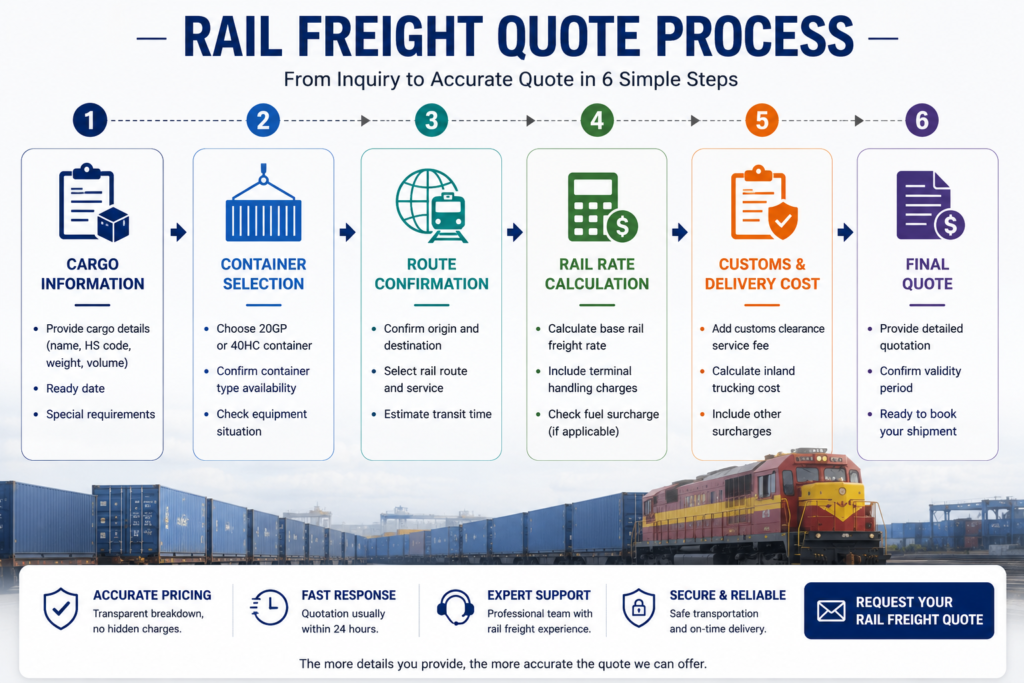
Steps to Request a Rail Freight Quote
| Step | Requirement |
|---|---|
| 1 | Confirm cargo details |
| 2 | Select container type |
| 3 | Provide origin and destination |
| 4 | Confirm delivery requirements |
| 5 | Compare service options |
Furthermore, businesses should work with freight providers that understand railway routes, customs procedures, and inland transportation.
Tips for Reducing Rail Shipping Costs
- Choose the correct container size.
- Book transportation early during peak seasons.
- Prepare customs documents in advance.
- Compare door-to-door and port-to-port options.
Additionally, a professional logistics provider can recommend whether 20GP or 40HC is more suitable based on cargo volume and budget.
Conclusion
A 20gp 40hc rail container shipping quote depends on container selection, transportation route, cargo details, and required logistics services. Understanding the differences between 20GP and 40HC containers helps businesses avoid unnecessary costs and improve shipping efficiency.
However, obtaining an accurate quotation requires more than checking basic freight rates. Companies should consider customs procedures, terminal handling, inland delivery, and overall supply chain requirements.
By selecting the right container type and working with an experienced rail freight provider, businesses can achieve reliable transportation, better cost control, and smoother international shipping operations.



FAQ:
Q1.How much does a 20GP rail container shipping quote cost?
A 20GP rail container usually depends on the route, cargo weight, destination, and additional services. International rail freight costs commonly range from several thousand dollars.
Q2.Is a 40HC container more expensive than a 20GP container?
A 40HC container usually costs more, but the price difference depends on the route. It can reduce unit shipping costs when transporting large-volume cargo.
Q3.How long does rail container shipping take?
Transit time depends on the route. China-Europe rail shipments usually take around 15–25 days, while regional routes may require less time.
Q4.What documents are needed for rail container shipping?
Common documents include commercial invoices, packing lists, customs declarations, HS codes, certificates of origin, and railway transport documents.
Q5.How can I get an accurate rail container quote?
Provide cargo details, container type, origin, destination, and delivery requirements. A professional freight provider can calculate a complete transportation quotation.