

- By Jaxin
- July 29, 2026
- logistics process
Introduction
Warehouse and rail freight integrated logistics helps businesses combine long-distance rail transportation with professional storage and distribution services to create a more efficient supply chain. Many importers and manufacturers face challenges after cargo arrives by rail, including temporary storage needs, inventory management issues, customs delays, and inefficient inland distribution.
However, traditional rail freight services usually focus only on transportation between terminals. Therefore, companies often need additional warehouse support to manage cargo handling, inventory control, and final delivery arrangements.
Moreover, integrating warehouses with rail freight creates a complete logistics network. Cargo can move from factories to rail terminals, through bonded or standard warehouses, and finally to customers or production facilities with better coordination.
This article explains how warehouse and rail freight integration works, why companies choose this model, how it reduces logistics costs, and how businesses can build a more flexible international supply chain.

Why Is Warehouse and Rail Freight Integrated Logistics Important?
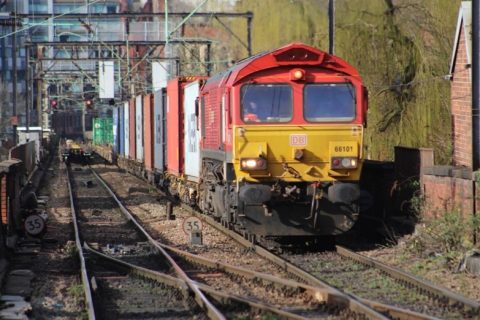
Warehouse and rail freight integrated logistics provides a connection between transportation, storage, and distribution. Instead of managing separate rail providers and warehouse operators, businesses can use an integrated solution that coordinates multiple logistics stages.
The Role of Integrated Warehouse and Rail Services
Rail freight is effective for long-distance transportation because it offers stable schedules and competitive costs. However, cargo usually requires additional handling after reaching the destination terminal.
A warehouse integrated with rail freight can provide:
| Service | Business Benefit |
|---|---|
| Cargo Receiving | Smooth transfer from rail terminal |
| Temporary Storage | Prevents delivery delays |
| Inventory Management | Improves stock visibility |
| Customs Support | Simplifies import procedures |
| Distribution Handling | Enables faster final delivery |
Furthermore, this model is valuable for companies that need flexible inventory management. Instead of immediately transporting all cargo to final destinations, businesses can store products closer to regional markets.
Industries Using Warehouse and Rail Integration
| Industry | Main Requirement |
|---|---|
| Automotive | Stable component supply |
| Electronics | Faster inventory turnover |
| Machinery | Secure storage and delivery planning |
| Retail | Regional stock distribution |
| Manufacturing | Production continuity |
Additionally, companies can reduce supply chain uncertainty by combining reliable rail transportation with professional warehouse operations.
How Does Warehouse and Rail Freight Integrated Logistics Work?
A successful integrated logistics process connects several stages from origin pickup to final delivery. Therefore, businesses can improve efficiency by coordinating transportation and warehouse operations together.
Complete Logistics Process
| Stage | Operation | Purpose |
|---|---|---|
| Factory Pickup | Cargo collection | Prepare shipment |
| Rail Transportation | Long-distance movement | Reduce transportation costs |
| Rail Terminal Arrival | Cargo transfer | Connect inland logistics |
| Warehouse Handling | Storage and management | Control inventory |
| Final Delivery | Truck distribution | Complete supply chain |
Moreover, warehouses located near rail terminals can significantly reduce unnecessary transportation movements.
Key Warehouse Functions After Rail Arrival
After cargo reaches the destination area, warehouses can provide:
- Cargo inspection
- Palletizing and labeling
- Inventory counting
- Order preparation
- Consolidation services
- Regional distribution
Additionally, bonded warehouses can support businesses that need customs flexibility before releasing goods into local markets.
Why Integration Improves Efficiency
Without integration, companies may need to coordinate:
- Railway operators
- Warehouse providers
- Customs agents
- Trucking companies
This increases communication complexity.
However, an integrated provider manages these processes together, reducing delays and improving shipment visibility.
Is Integrated Warehouse and Rail Freight Better Than Traditional Shipping?
Many companies compare warehouse-integrated rail solutions with traditional transportation methods. The best option depends on shipment volume, delivery requirements, and inventory strategy.
Transportation Model Comparison
| Solution | Cost Level | Transit Speed | Flexibility |
|---|---|---|---|
| Ocean Freight + Separate Warehouse | Low | Slow | Medium |
| Rail Freight + Warehouse Integration | Medium | Faster | High |
| Air Freight + Warehouse Service | High | Fastest | High |
Rail and warehouse integration provides a balance between cost control and delivery speed.
Traditional vs Integrated Logistics
| Traditional Model | Integrated Model |
|---|---|
| Separate transportation and storage providers | One coordinated logistics system |
| More communication points | Simplified management |
| Higher coordination risks | Better shipment visibility |
| Limited inventory flexibility | Regional storage options |
Furthermore, integrated solutions are especially useful for businesses expanding into new markets because warehouses can support local distribution without requiring immediate investment in facilities.
How Can Warehouse and Rail Freight Integrated Logistics Reduce Costs?
Cost control is one of the main reasons businesses choose integrated logistics solutions. Although adding warehouse services creates additional operations, it can reduce overall supply chain expenses.
Main Cost-Saving Factors
| Factor | Cost Impact |
|---|---|
| Consolidated Transportation | Reduces unnecessary shipments |
| Regional Warehousing | Lowers repeated long-distance deliveries |
| Inventory Planning | Prevents emergency shipping |
| Rail Transportation | Costs less than air freight |
| Better Scheduling | Reduces storage penalties |
Moreover, companies can improve inventory efficiency by storing products closer to customers instead of transporting every shipment immediately.
Example Cost Structure
| Logistics Activity | Estimated Cost Influence |
|---|---|
| Rail Transportation | Main transportation expense |
| Warehouse Storage | Depends on volume and duration |
| Handling Service | Depends on cargo operations |
| Final Truck Delivery | Depends on distance |
Therefore, businesses should evaluate total supply chain costs rather than comparing individual service prices.
A professional logistics provider can optimize the combination of rail, warehouse, and trucking services to reduce unnecessary expenses.
Real-World Warehouse and Rail Freight Integrated Logistics Cases
Supporting Automotive Supply Through European Rail Distribution Hub
| Item | Details |
|---|---|
| Origin & Destination | Chongqing, China → Warsaw, Poland |
| Cargo | Automotive Components |
| Transit Time | 22 Days |
| Cost | Approximately $8,000 |
| Transportation Method | China-Europe Rail Freight + Regional Warehouse Distribution |
| Customs Clearance Details | Import clearance completed before warehouse release |
| Warehouse Solution | Components stored temporarily before factory delivery scheduling |
| Overview | An automotive supplier required stable component delivery for multiple production locations. The company used rail transportation combined with a regional warehouse to manage inventory and coordinate factory deliveries. |
| Result | Reduced supply interruptions and improved production planning. |
Optimizing Electronics Inventory Through Rail-Connected Warehousing
| Item | Details |
|---|---|
| Origin & Destination | Shenzhen, China → Budapest, Hungary |
| Cargo | Consumer Electronics |
| Transit Time | 20 Days |
| Cost | Approximately $6,500 |
| Transportation Method | Rail Freight + Bonded Warehouse + Local Delivery |
| Customs Clearance Details | Goods remained under customs control before final distribution |
| Warehouse Solution | Inventory stored and distributed according to customer demand |
| Overview | A technology distributor needed flexible inventory management before releasing products to different markets. A bonded warehouse helped control stock movement and reduce unnecessary transportation. |
| Result | Improved inventory flexibility and reduced delivery delays. |
How Should Companies Choose a Warehouse and Rail Freight Logistics Partner?
Selecting the right logistics partner directly affects supply chain reliability. Therefore, companies should evaluate more than transportation prices.
Important Selection Criteria
| Criteria | Importance |
|---|---|
| Rail Network Experience | Ensures reliable transportation |
| Warehouse Locations | Supports efficient distribution |
| Customs Capability | Reduces clearance risks |
| Tracking System | Improves shipment visibility |
| Trucking Resources | Completes final delivery |
Moreover, experienced providers can offer customized solutions instead of standard transportation services.
Questions Businesses Should Ask
Before cooperation, companies should confirm:
- Do you provide rail and warehouse integration?
- Can you support bonded storage?
- Do you arrange final delivery?
- How do you manage customs procedures?
- Can you provide shipment tracking?
As a result, selecting a qualified logistics partner helps businesses create a stable and scalable supply chain.
Conclusion
Warehouse and rail freight integrated logistics provides businesses with a complete solution that combines transportation, storage, inventory management, and final distribution. Instead of managing separate logistics operations, companies can improve efficiency through a coordinated supply chain system.
Furthermore, integrating warehouses with rail freight helps reduce transportation risks, optimize inventory control, and provide greater flexibility for international trade.
For importers, manufacturers, and distributors, this logistics model creates a stronger foundation for long-term supply chain growth.
Need a customized warehouse and rail freight solution? Our logistics team can analyze your cargo flow, transportation route, storage needs, and delivery goals to create an efficient integrated logistics plan.
FAQs
1. What is warehouse and rail freight integrated logistics?
Warehouse and rail freight integrated logistics combines rail transportation with storage, inventory management, customs support, and distribution services to create a complete supply chain solution.
2. Is integrated warehouse and rail freight cheaper than traditional shipping?
It can reduce overall costs by improving transportation planning, lowering emergency shipments, and optimizing inventory storage near target markets.
3. How long does warehouse-integrated rail shipping take?
Transit time depends on the route and destination. China-Europe rail shipments commonly take around 15–25 days, plus warehouse and delivery handling time.
4. What documents are required for warehouse and rail freight services?
Common documents include commercial invoices, packing lists, rail waybills, customs declarations, HS codes, and warehouse receiving documents.
5. How do I choose a warehouse and rail freight logistics provider?
Choose a provider with rail experience, warehouse facilities, customs expertise, local delivery networks, and transparent shipment tracking capabilities.