

Introduction
Importers moving containers from China often face a difficult choice: ocean freight may offer lower base rates, while air freight can become too expensive for regular shipments. Meanwhile, rail container shipping can provide a useful middle ground when transit time, inventory costs, and total logistics expenses all matter.
Railway container shipping with competitive pricing is not simply about finding the lowest freight quotation. Instead, importers should compare the complete transportation package, including container availability, origin handling, rail charges, border procedures, destination delivery, and customs services. Research on China-Europe rail transportation also shows that rail can compete with sea freight when shorter transit times and the value of inventory are considered together.
Moreover, current market conditions make transparent quotations especially important. In July 2026, China-Europe rail freight averaged around $10,100/FEU in one market-monitoring report, while rates on many routes had stabilized after earlier increases.

Why Choose Railway Container Shipping With Competitive Pricing?
Rail container shipping can be attractive when an importer needs a faster alternative to ocean freight without paying air freight prices. Furthermore, rail terminals can sometimes provide more direct access to inland markets, reducing part of the final-mile burden. Research has found typical China-Europe rail transit times around two to three weeks, compared with substantially longer sea transportation on comparable corridors.
Compare the Main Transportation Options
| Mode | Relative Cost | Transit Speed | Best For | Key Advantage |
|---|---|---|---|---|
| Ocean | Low | Slow | Large, non-urgent cargo | Lowest base cost |
| Rail | Medium | Medium-fast | FCL and time-sensitive cargo | Balance of cost and speed |
| Air | High | Fast | Urgent/high-value cargo | Fastest transit |
| Road | Medium-high | Flexible | Regional shipments | Flexible delivery |
However, “competitive pricing” depends heavily on the route and service scope. A terminal-to-terminal rail quote may look cheaper than a door-to-door ocean quotation simply because fewer services are included.
Therefore, importers should compare equivalent logistics scopes before choosing a transportation mode.
How Can Importers Get Competitive Railway Container Shipping Rates?
The best rail rate usually comes from optimizing several factors rather than negotiating only the headline price.
Choose the Right Container
Container selection should match both cargo volume and weight.
| Container | Suitable Cargo | Pricing Consideration |
|---|---|---|
| 20GP | Dense or heavy cargo | Efficient when weight is the main constraint |
| 40GP | General cargo | More cubic capacity |
| 40HC | Bulky cargo | Maximum standard container volume |
| LCL | Smaller shipments | Avoids paying for unused FCL space |
Additionally, container availability can affect the final quotation. Current 2026 market data indicates that container leasing costs have risen on some China-Europe corridors, reaching around $1,400 on average in July monitoring.
Consolidate Regular Shipments
Importers with recurring cargo can explore volume-based agreements. Moreover, regular shipping patterns allow a forwarder to plan equipment and rail capacity more efficiently.
For example, shipping several containers every month may create better commercial opportunities than booking each container independently.
Optimize the Entire Route
A competitive quotation should consider:
- Factory pickup
- Origin rail terminal
- Container handling
- Main rail transportation
- Border handling
- Destination terminal
- Customs clearance
- Final-mile trucking
Consequently, the cheapest international rail rate may not produce the lowest total logistics cost.
What Is Included in Competitive Railway Container Shipping Pricing?
A transparent quotation should make it easy to identify what you are paying for. Otherwise, a low initial price can become expensive after additional charges appear.
Common Cost Components
| Cost Component | Usually Quoted? | What to Confirm |
|---|---|---|
| Factory pickup | Optional | Pickup location |
| Origin handling | Yes | Terminal |
| Container | Yes | 20GP/40GP/40HC |
| Rail freight | Yes | Exact route |
| Border handling | Depends | Included countries |
| Customs clearance | Optional | Brokerage scope |
| Destination handling | Depends | Terminal |
| Final trucking | Optional | Delivery address |
| Storage | Usually separate | Free time |
| Duties & taxes | Service-dependent | Import responsibility |
Furthermore, importers should ask whether fuel adjustments, container leasing, congestion charges, and exceptional handling costs can change during the quotation period.
Look Beyond the Headline Rate
For example:
Quote A: $X rail freight + $Y destination charges
Quote B: $X + destination handling + trucking included
Quote B may actually provide the lower total cost even when its headline rail rate appears higher.
Therefore, always compare total landed logistics cost, not just the international rail charge.
Can FCL and LCL Railway Container Shipping Both Offer Competitive Pricing?
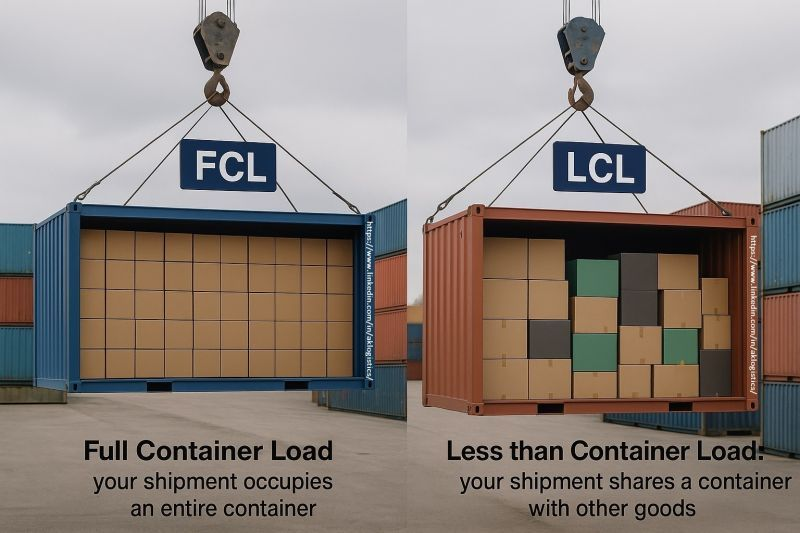
Yes, but they serve different shipping patterns.
FCL generally works better when the importer has enough cargo to efficiently use a complete container. Meanwhile, LCL can make sense for smaller shipments that do not justify dedicated equipment.
Some China rail freight providers offer both FCL and LCL services, as well as CFS-to-CFS and door-to-door solutions.
FCL Rail Shipping
FCL provides dedicated container capacity and can simplify cargo handling. Therefore, it often suits manufacturers, distributors, and wholesalers with regular containerized shipments.
LCL Rail Shipping
LCL allows smaller shipments to share container capacity. Consequently, it can reduce the cost of sending cargo that would otherwise travel in a partially empty FCL container.
| Shipping Profile | Recommended Option | Main Benefit |
|---|---|---|
| 1–3 pallets | LCL | Avoids unused container capacity |
| Full container | FCL | Dedicated equipment |
| Monthly container volume | FCL contract | Better planning |
| Multiple suppliers | Consolidated LCL/FCL | Combines cargo |
| Warehouse delivery | Door-to-door | Simplified coordination |
Moreover, some operators provide container purchasing or leasing services and combine rail with sea transportation when that produces a better cost structure.
What Are Real Examples of Railway Container Shipping With Competitive Pricing?
📌 Case Study 1 — FCL Consumer Electronics
| Item | Details |
|---|---|
| 📍 Origin | Shenzhen factory → German distribution warehouse |
| 📦 Cargo | Consumer electronics |
| ⏱️ Transit Time | Approximately 16–23 days |
| 💰 Cost | FCL rail freight with destination delivery quoted separately |
| 🚆 Transportation Method | Factory pickup + China-Europe rail + European trucking |
| ⚖️ Customs Clearance Details | Commercial invoice, packing list, HS classification, and product information prepared before import declaration |
| 📋 Brief Overview | The importer needed faster delivery than ocean freight without using air freight. A 40HC rail solution provided dedicated container capacity and coordinated final-mile delivery. |
📌 Case Study 2 — Consolidated Machinery Components
| Item | Details |
|---|---|
| 📍 Origin | Suzhou and Ningbo suppliers → Polish warehouse |
| 📦 Cargo | Machinery components |
| ⏱️ Transit Time | Approximately 17–24 days |
| 💰 Cost | Consolidated rail freight based on cargo volume and destination |
| 🚆 Transportation Method | Supplier pickup + cargo consolidation + rail + final trucking |
| ⚖️ Customs Clearance Details | Commercial invoices, packing lists, HS codes, and product descriptions prepared for clearance |
| 📋 Brief Overview | Several smaller supplier shipments were consolidated to avoid inefficient individual transportation. The importer received one coordinated logistics plan instead of arranging multiple shipments. |
How Can Importers Reduce Railway Container Shipping Costs?
Competitive pricing requires continuous cost control. Therefore, importers should review the complete shipment process instead of negotiating only the main rail freight component.
Improve Container Utilization
Efficient loading can reduce the logistics cost per unit. For example, optimizing pallet dimensions and carton stacking may allow more cargo to fit into the same container.
Plan Shipments Earlier
Advance booking can provide more options for rail schedules, equipment, and routes. Moreover, it gives the forwarder more time to compare available services.
Negotiate Recurring Volume
Regular shipments create opportunities for structured pricing. Consequently, importers should provide estimated monthly or quarterly container volumes when requesting a quotation.
| Cost-Saving Area | Recommended Action |
|---|---|
| Container selection | Match equipment to cargo |
| Loading | Maximize usable capacity |
| Booking | Plan ahead |
| Volume | Negotiate recurring shipments |
| Origin pickup | Consolidate supplier collections |
| Destination delivery | Pre-book trucking |
| Customs | Prepare documents early |
| Route | Compare alternative gateways |
Additionally, importers should consider whether a slightly higher rail rate could reduce other logistics expenses.
For instance, a route with a higher rail charge but lower destination trucking costs may provide a better overall result.
Conclusion
Railway container shipping with competitive pricing offers importers a practical way to balance transportation cost and delivery speed. However, the best price is rarely the lowest advertised rail rate.
Instead, importers should compare container type, route, capacity, origin handling, border charges, customs, destination services, and final-mile transportation. Moreover, current market conditions show why quotations should have clearly defined validity periods and included services. July 2026 monitoring placed average China-Europe rail freight around $10,100/FEU, while rates on many routes were entering a stabilization phase.
Therefore, a competitive rail solution should combine transparent pricing, suitable equipment, efficient routing, reliable capacity, and complete logistics coordination.
Need competitive container rates from China without sacrificing transit planning? Send your origin, destination, cargo type, container size, and monthly volume to request railway container shipping with competitive pricing tailored to your shipment.
FAQs
1. Is railway container shipping cheaper than air freight?
Generally, rail offers a lower-cost alternative to air freight for larger non-urgent shipments. However, ocean freight may still provide lower base transportation costs on some routes.
2. Which container is best for railway shipping?
20GP suits dense cargo, while 40GP and 40HC containers provide more cubic capacity. Therefore, the correct choice depends on cargo weight, dimensions, and volume.
3. Can I negotiate competitive rail container rates?
Yes. Regular volumes, flexible schedules, accurate shipment forecasts, and efficient container utilization can improve negotiating opportunities with freight providers.
4. Does the quoted rail rate include door delivery?
Not always. Some quotations cover terminal-to-terminal transportation only, while others include trucking. Therefore, request a complete door-to-door breakdown when comparing providers.
5. How can I avoid hidden rail freight charges?
Ask for a detailed quotation covering rail freight, origin handling, container costs, border charges, destination handling, customs, trucking, storage, and applicable surcharges.