


- By Jaxin
- August 13, 2026
- Amazon FBA
Introduction
For Amazon sellers, getting cargo to the destination country does not mean the inbound shipment is finished. A shipment can clear customs successfully and still experience problems if the carrier arrives without the required appointment, uses incorrect shipment information, or misses the scheduled delivery window.
Therefore, businesses looking to avoid Amazon warehouse appointment delivery failure need to manage the final delivery stage as carefully as the international transportation.
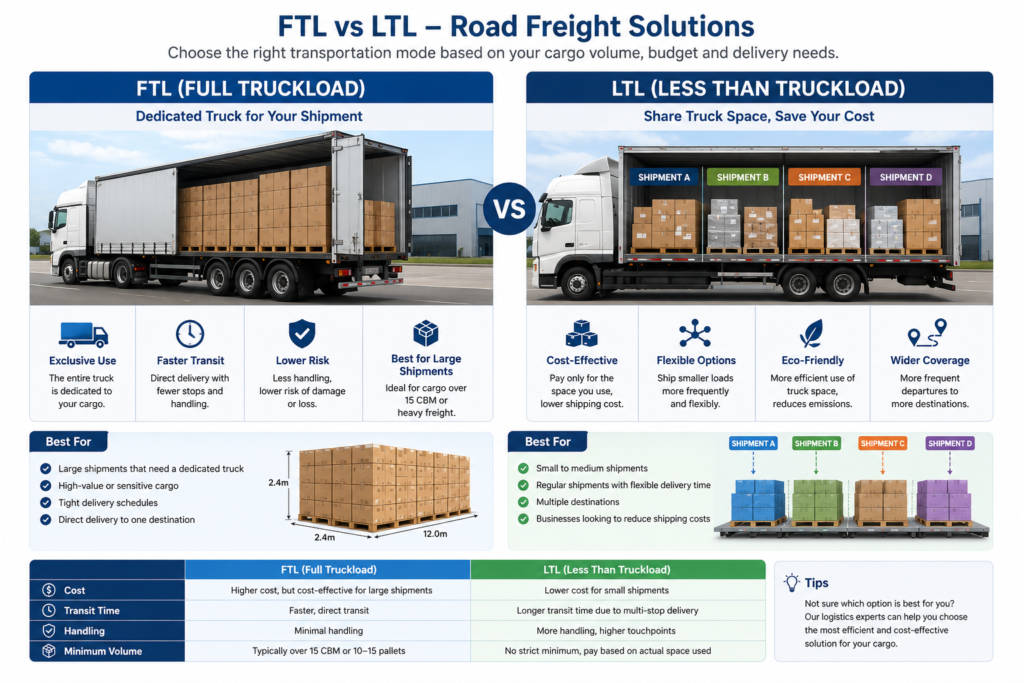
Amazon states that non-partnered LTL and FTL shipments require an advance delivery appointment, and carriers without a scheduled appointment may be rejected upon arrival.
Moreover, Amazon recommends accurate tracking information, correct destination details, and early shipment planning to reduce receiving delays.
The solution is not simply to promise a “guaranteed appointment.” Instead, a reliable logistics provider should control the parts of the process it can manage: documentation, carrier selection, appointment submission, customs coordination, trucking, follow-up, and delivery monitoring.

Why Do Amazon Warehouse Deliveries Fail?

Amazon warehouse delivery problems can happen for several reasons. In many cases, the issue starts before the truck reaches the fulfillment center.
Common Failure Points
| Problem | Potential Result |
|---|---|
| 📅 No Appointment | Shipment may be rejected |
| 📄 Incorrect BOL | Appointment problems |
| 🔢 Wrong Shipment ID | Delivery information mismatch |
| 📍 Wrong Destination | Cargo sent to the wrong location |
| 📦 Incorrect Box/Pallet Count | Receiving delays |
| 🚚 Carrier Arrives Late | Missed delivery window |
| 🛃 Customs Delay | Trucking schedule disrupted |
| 📞 Poor Communication | Slow problem resolution |
Amazon’s carrier guidance requires shipment information such as Amazon reference IDs, shipment IDs, tracking or PRO numbers, and shipment quantities for appointment scheduling.
Consequently, appointment failure is often a coordination problem, not simply a trucking problem.
The Typical Chain Reaction
Customs Delay → Appointment Missed → Truck Rescheduled → Warehouse Receiving Delayed → Inventory Available Later
For sellers with fast-moving products, this can create additional inventory pressure.
How To Avoid Amazon Warehouse Appointment Delivery Failure
A reliable process should begin before the shipment reaches the final-mile stage.
1. Verify The FBA Destination
First, confirm the destination shown in the Amazon shipment workflow and ensure the carrier uses the same destination.
Amazon specifically warns that incorrect destination information can cause receiving delays.
2. Check Shipment Information
Next, verify:
- Amazon reference IDs
- FBA Shipment ID
- BOL
- Tracking or PRO number
- Box quantity
- Pallet quantity
- Unit quantity when applicable
These details should remain consistent between the seller’s shipment information and the carrier’s appointment request.
3. Use A Qualified Carrier
Only professional carriers should handle Amazon fulfillment-center delivery appointments.
Therefore, sellers should avoid choosing a final-mile carrier based only on the lowest trucking rate.
4. Schedule The Appointment Early
Amazon recommends scheduling delivery appointments ahead of important sales periods and advises sellers to book transportation early enough to account for supplier, carrier, and customs delays.
5. Monitor The Delivery Window
After the appointment is confirmed, the carrier still needs to arrive within the agreed window.
Therefore:
Appointment Confirmed ≠ Shipment Completed
The logistics provider should continue monitoring the shipment until delivery is completed.
What Should A Reliable FBA Logistics Provider Handle?
A professional provider should coordinate the entire inbound chain rather than hand the shipment to a local trucker and stop communicating.
International Transportation
The provider coordinates ocean, rail, or air transportation according to the shipment requirements.
Customs Clearance
Before final delivery, customs clearance should be monitored closely.
If clearance takes longer than expected, the delivery schedule may need to be adjusted.
Destination Trucking
After release, the provider arranges a suitable carrier for the Amazon destination.
Appointment Management
The carrier submits the appointment request using the correct shipment information.
For non-partnered LTL/FTL shipments, Amazon’s published guidance confirms that the carrier or seller must arrange the delivery appointment in advance.
Delivery Monitoring
Finally, the logistics team tracks the truck until it arrives and confirms delivery.
| Stage | Logistics Responsibility |
|---|---|
| 🏭 Supplier | Cargo preparation |
| 🚆🚢✈️ International Freight | Main transportation |
| 🛃 Customs | Import clearance |
| 🚛 Trucking | Final-mile transportation |
| 📅 Appointment | Delivery scheduling |
| 🏢 Amazon Warehouse | Final receiving |
| 📍 Tracking | Status monitoring |
As a result, the seller has one coordinated logistics process instead of several disconnected providers.
How Can Customs Delays Cause Appointment Failure?
International FBA shipments have another important risk: customs clearance.
Imagine a shipment originally scheduled as:
Rail Arrival → Customs Clearance → Truck Pickup → Amazon Appointment
If customs clearance takes longer than expected, the truck may no longer be able to meet the original appointment.
Therefore, the logistics provider should monitor customs status before dispatching the final truck.
A Better Process
Customs Status → Cargo Release → Truck Availability → Appointment → Warehouse Delivery
This approach is more reliable than booking everything independently.
Furthermore, Amazon’s guidance recommends planning shipments early enough to account for customs delays and other supply-chain disruptions.
Customs-Related Information To Confirm
- 📄 Commercial invoice
- 📋 Packing list
- 🏷 Product information
- 🛃 Importer information
- 💰 Customs value
- 📦 Shipment quantity
- 🚆 Transport documents
Once customs release is confirmed, the logistics provider can coordinate the final delivery schedule more effectively.
Therefore, customs brokerage and Amazon appointment management should be treated as connected services.
Real-World Cases: Avoiding Amazon Warehouse Delivery Failure
📦 Case 1: Rail Shipment Delayed During Customs
| 📌 Item | Details |
|---|---|
| 🚢 Route | China Factory → Rail → U.S. Customs → Amazon Warehouse |
| 📦 Cargo | Consumer Products |
| ⏱ Original Plan | 18-Day Rail Delivery |
| 🚆 Transport | Rail + Customs + LTL |
| 🛃 Challenge | Customs release occurred later than expected |
| 📝 Solution | Delayed final trucking and coordinated the delivery appointment according to cargo release |
| ✅ Result | Avoided sending an empty or unavailable truck to the warehouse |
🚛 Case 2: Incorrect Shipment Information
| 📌 Item | Details |
|---|---|
| 🚢 Route | U.S. Distribution Warehouse → Amazon Fulfillment Center |
| 📦 Cargo | Home Products |
| 🚚 Transport | LTL |
| 🛃 Challenge | Shipment information did not match the carrier’s appointment request |
| 📝 Solution | Rechecked FBA shipment IDs, BOL, carton quantities, and destination information before resubmitting |
| ✅ Result | Appointment coordination proceeded with corrected information |
📅 Case 3: Time-Sensitive Seasonal Inventory
| 📌 Item | Details |
|---|---|
| 🚢 Route | China Supplier → Rail → U.S. → Amazon Warehouse |
| 📦 Cargo | Seasonal Consumer Goods |
| ⏱ Target | Before Seasonal Demand Peak |
| 🚆 Transport | Rail + Customs + Final Trucking |
| 🛃 Challenge | Tight inventory deadline |
| 📝 Solution | Planned the final delivery requirements before rail departure and monitored customs throughout transit |
| ✅ Result | The logistics team had time to coordinate the final-mile appointment instead of waiting until the cargo arrived |
Amazon Warehouse Appointment Failure Prevention Checklist
Before dispatching an FBA shipment, sellers should complete a final review.
📋 Pre-Delivery Checklist
FBA Information
- ☑️ Correct FBA Shipment ID
- ☑️ Correct Amazon reference information
- ☑️ Correct fulfillment-center destination
Cargo Information
- ☑️ Correct carton count
- ☑️ Correct pallet count
- ☑️ Correct unit count
- ☑️ Accurate shipment weight
Carrier Information
- ☑️ Professional carrier selected
- ☑️ BOL prepared correctly
- ☑️ Tracking/PRO number available
- ☑️ Appointment responsibility confirmed
Customs
- ☑️ Import documents prepared
- ☑️ Customs clearance monitored
- ☑️ Cargo release confirmed before final dispatch
Final Delivery
- ☑️ Appointment requested
- ☑️ Appointment confirmed
- ☑️ Truck schedule matched to appointment
- ☑️ Delivery status monitored
Amazon also recommends providing accurate tracking and shipment information, because this helps its fulfillment network prepare for inbound inventory and can reduce receiving delays.
Therefore, the checklist should be completed before the truck leaves, not after a delivery problem occurs.
Conclusion
To avoid Amazon warehouse appointment delivery failure, sellers need to manage more than the appointment itself. The entire inbound process should connect international transportation, customs clearance, final-mile trucking, appointment scheduling, and delivery monitoring.
Most importantly, sellers should not rely on a logistics provider’s claim of a “100% guaranteed appointment.” Amazon controls appointment availability. A more realistic and professional approach is to work with a provider that can control the surrounding logistics process and respond quickly when Amazon’s schedule changes.
Accurate FBA information is the foundation. Furthermore, the carrier needs the correct BOL, shipment IDs, reference information, cargo quantities, and destination details.
At the same time, customs clearance should be monitored before final trucking is dispatched. Otherwise, a customs delay can quickly turn into a missed appointment.
Ultimately, reliable FBA delivery depends on preparation + qualified carriers + accurate documentation + appointment coordination + active tracking.
When these stages are managed as one process, sellers can reduce avoidable delivery failures, improve inventory receiving reliability, and maintain better control over their international supply chain.
🤝 Want To Make Your FBA Deliveries More Reliable?
Tell us your origin, cargo type, volume, transportation method, FBA destination, and required delivery date. We can help coordinate the international freight, customs, final-mile trucking, and Amazon delivery process.
FAQs
1. How can I avoid an Amazon warehouse delivery appointment failure?
Use accurate shipment information, a qualified carrier, advance appointment scheduling, correct documentation, and active delivery monitoring.
2. Can a freight forwarder guarantee an Amazon appointment?
No. Amazon controls appointment availability. A freight forwarder can coordinate the request and reduce avoidable scheduling problems.
3. What information does the carrier need for an Amazon appointment?
Common requirements include Amazon reference IDs, shipment IDs, tracking or PRO numbers, BOL information, and box or pallet quantities.
4. Can customs delays cause an Amazon appointment to be missed?
Yes. If cargo is not released in time, the final truck may miss the planned delivery window. Therefore, customs and appointment scheduling should be coordinated.
5. What happens if a carrier arrives without an appointment?
For applicable non-partnered LTL and FTL shipments, Amazon states that carriers without a scheduled delivery appointment may be rejected upon arrival.