

- By Jaxin
- July 14, 2026
- Amazon FBA
Best rail freight option for urgent commercial cargo is a common concern for importers, manufacturers, and distributors facing tight delivery deadlines. While air freight offers the fastest transit, it often comes with high transportation costs. Meanwhile, ocean freight may be too slow for time-sensitive shipments.
Therefore, many businesses are turning to rail freight as a practical middle-ground solution. Moreover, international rail services provide faster transit than ocean shipping while maintaining significantly lower costs than air transportation.
This guide explores the best rail freight solutions for urgent commercial cargo and explains how businesses can balance speed, cost, and reliability.

What Is the Best Rail Freight Option for Urgent Commercial Cargo?
The best rail freight option depends on cargo urgency, destination, shipment size, and budget. Therefore, businesses should evaluate transit requirements before selecting a transportation method.
Common Rail Freight Options
| Service Type | Transit Time | Best For |
|---|---|---|
| Express Rail Freight | 12–18 days | High-priority commercial cargo |
| Standard Rail Freight | 16–25 days | Regular replenishment shipments |
| Rail + Truck Multimodal | 14–22 days | Flexible regional distribution |
| Rail Consolidation Service | 18–28 days | Smaller cargo volumes |
Moreover, express rail services often receive priority handling at terminals, helping reduce overall delivery times.
When Should Businesses Choose Rail Freight?
Additionally, rail freight is ideal when:
- Air freight exceeds budget limits
- Ocean freight is too slow
- Delivery deadlines are important
- Cargo volume is too large for economical air shipment
Therefore, rail freight often provides the most balanced solution for urgent commercial shipments.
Why Is Rail Freight Faster Than Ocean Shipping for Urgent Cargo?
Ocean freight remains a cost-effective transportation option. However, long sailing schedules can create challenges for urgent commercial shipments.
| Transportation Method | Average Transit Time |
|---|---|
| Air Freight | 3–10 days |
| Express Rail Freight | 12–18 days |
| Standard Rail Freight | 16–25 days |
| Ocean Freight | 30–45 days |
Moreover, rail transportation avoids many maritime bottlenecks such as port congestion and vessel schedule changes.
Key Advantages of Rail Freight
- Faster transit than ocean shipping
- More predictable schedules
- Reduced port-related delays
- Better inventory turnover
Consequently, businesses can replenish inventory more quickly and reduce stock shortage risks.
How Does Rail Improve Supply Chain Agility?
Furthermore, shorter transit times allow companies to react faster to market demand changes.
As a result, rail freight supports more responsive inventory management strategies.
How Can Express Rail Services Support Urgent Commercial Cargo?
Express rail freight services are specifically designed for time-sensitive shipments. Therefore, they are often considered the best rail freight option for urgent commercial cargo.
Features of Express Rail Freight
| Feature | Benefit |
|---|---|
| Priority Terminal Handling | Faster cargo processing |
| Dedicated Capacity | Reduced waiting times |
| Scheduled Departures | Predictable transit |
| Enhanced Tracking | Better shipment visibility |
Moreover, express rail services typically focus on reducing terminal dwell times and border-crossing delays.
Which Cargo Types Benefit Most?
Additionally, express rail is suitable for:
- Electronics
- Industrial equipment
- Automotive components
- Retail inventory
- Manufacturing materials
Therefore, businesses with urgent replenishment requirements often choose express rail solutions.
How Does Rail Freight Compare with Air Freight for Urgent Shipments?
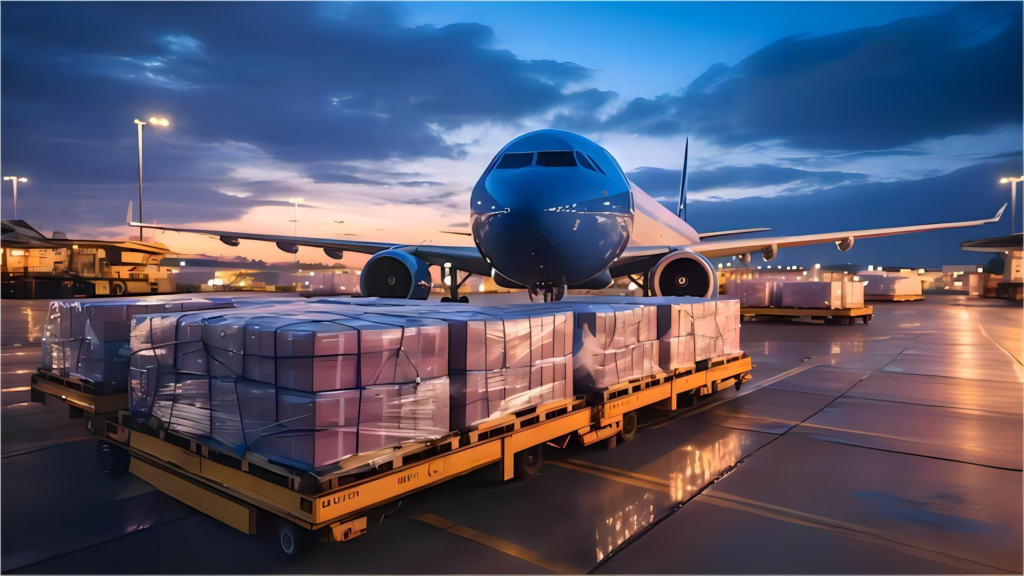
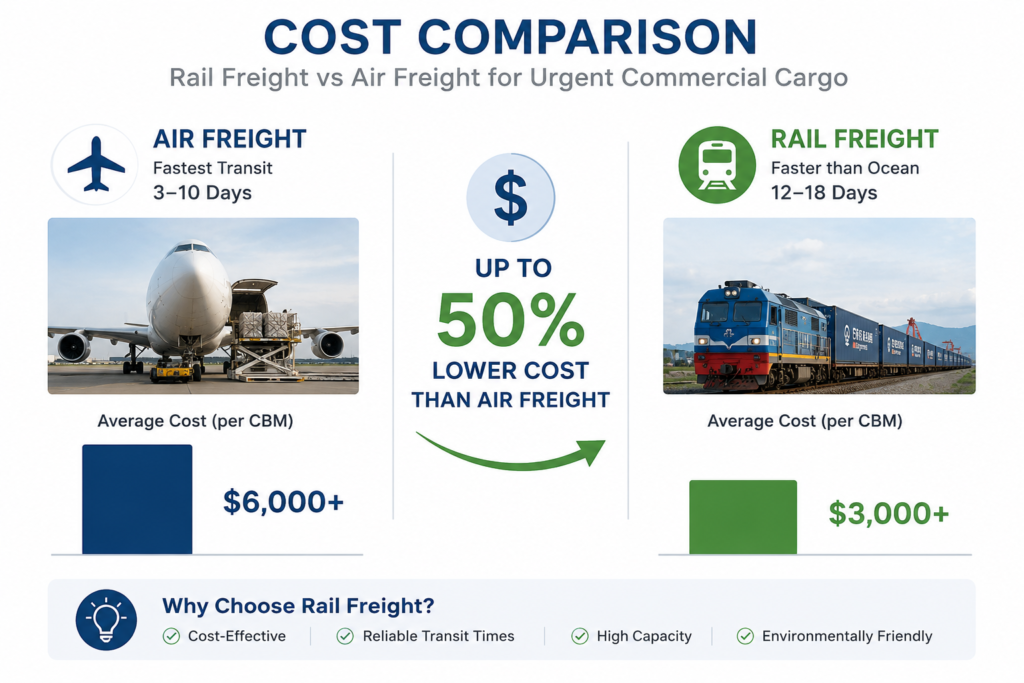
Many companies automatically choose air freight for urgent cargo. However, rail freight can provide significant cost advantages.
| Factor | Rail Freight | Air Freight |
|---|---|---|
| Cost | Medium | High |
| Transit Time | 12–25 days | 3–10 days |
| Capacity | High | Limited |
| Sustainability | Better | Lower |
Moreover, rail freight becomes increasingly attractive when shipment volume increases.
When Is Air Freight Still Necessary?
Air freight may remain the best option when:
- Delivery deadlines are extremely tight
- Cargo is lightweight and high-value
- Production stoppages are imminent
However, many businesses find rail freight sufficient for urgent but not emergency shipments.
How Can Businesses Reduce Delays for Urgent Rail Freight Cargo?
Even urgent shipments can face delays if transportation planning is inadequate. Therefore, businesses should prepare carefully before cargo departure.
Delay Prevention Strategies
| Strategy | Benefit |
|---|---|
| Early Capacity Booking | Secure space availability |
| Document Verification | Reduce customs delays |
| HS Code Validation | Avoid classification issues |
| Route Planning | Minimize congestion risks |
Moreover, proactive planning improves delivery reliability.
Best Practices Before Shipment
Additionally, businesses should:
- Confirm customs requirements
- Verify consignee information
- Monitor rail network conditions
- Coordinate warehouse receiving schedules
Consequently, shipments move more smoothly through the transportation process.
Which Rail Freight Routes Are Best for Urgent Commercial Cargo?
Route selection directly affects transit speed. Therefore, businesses should evaluate route performance rather than choosing solely based on price.
Popular Fast Rail Corridors
| Route | Typical Transit Time |
|---|---|
| Chongqing → Tilburg | 14–18 days |
| Wuhan → Budapest | 15–19 days |
| Zhengzhou → Hamburg | 14–20 days |
| Suzhou → Milan | 16–21 days |
Moreover, experienced freight forwarders can recommend alternative routes when congestion affects primary corridors.
Why Route Flexibility Matters
Furthermore, route optimization helps reduce the impact of terminal bottlenecks and customs delays.
As a result, cargo reaches destination markets more reliably.
Case Study: Urgent Commercial Cargo Delivered by Rail
| Item | Details |
|---|---|
| Route | Wuhan, China → Budapest, Hungary |
| Cargo | Automotive spare parts |
| Transit Time | 16 days rail transit |
| Challenge | Customer needed inventory before production deadlines |
| Transportation Method | Express rail freight |
| Customs Clearance | Documents pre-approved before cargo arrival |
| Solution | Priority rail booking and customs preparation |
| Result | Cargo delivered on schedule while reducing costs compared with air freight |
How Should Businesses Choose the Best Rail Freight Provider for Urgent Cargo?
Selecting the right logistics partner is critical for urgent shipments. Therefore, businesses should focus on service capability rather than price alone.
What Capabilities Matter Most?
| Capability | Why It Matters |
|---|---|
| Express Rail Access | Faster transit options |
| Customs Expertise | Reduced border delays |
| Real-Time Tracking | Better visibility |
| Multimodal Services | Flexible delivery solutions |
Questions to Ask Before Booking
Additionally, businesses should ask:
- Can you provide express rail services?
- What is the average transit time on this route?
- How do you handle customs issues?
- Do you offer contingency plans?
Therefore, selecting an experienced provider improves delivery reliability and reduces logistics risks.
Conclusion
The best rail freight option for urgent commercial cargo depends on shipment urgency, route availability, and budget requirements. Moreover, express rail services offer an effective balance between speed and cost, making them an attractive alternative to expensive air freight.
By combining fast rail routes, proactive customs preparation, and experienced freight forwarding support, businesses can accelerate deliveries while maintaining cost control. Therefore, rail freight should be a key consideration for companies moving urgent commercial cargo internationally.
- Consult Ali China Freight Forwarding for the lowest quote. They will provide you with reliable, cost-effective service.
FAQs:
Q1.What is the best rail freight option for urgent commercial cargo?
Express rail freight is often the best choice because it offers faster transit times, priority handling, and lower costs than air freight.
Q2.How fast is express rail freight compared with ocean shipping?
Express rail services typically take 12–18 days, while ocean freight often requires 30–45 days depending on route conditions.
Q3.Is rail freight cheaper than air freight for urgent shipments?
Yes. Rail freight generally costs significantly less than air freight while still providing relatively fast delivery for commercial cargo.
Q4.How can businesses avoid delays on urgent rail shipments?
Early booking, accurate documentation, customs preparation, and route optimization help reduce transportation delays.
Q5.Which industries benefit most from urgent rail freight services?
Automotive, electronics, manufacturing, retail, and industrial equipment sectors commonly use urgent rail freight solutions to support time-sensitive supply chains.