

- By Jaxin
- July 20, 2026
- logistics process
Introduction
Multimodal logistics using rail freight and trucking services has become a preferred transportation strategy for companies that need reliable international shipping solutions. Many businesses today face increasing pressure to reduce logistics costs while maintaining stable delivery schedules. However, choosing only one transportation mode often creates limitations.
For example, ocean freight usually provides lower costs but requires longer transit times, while air freight offers speed but significantly increases expenses. Therefore, many importers and exporters are combining rail freight with trucking services to achieve a better balance between cost, speed, and flexibility.
Moreover, rail transportation provides efficient long-distance movement across continents, while trucking ensures seamless pickup and final delivery. As a result, businesses can create a complete door-to-door logistics network that improves supply chain performance.
This article explains how multimodal rail and trucking solutions work, why companies choose this approach, how to optimize transportation planning, and how real businesses benefit from this logistics model.

What Is Multimodal Logistics Using Rail Freight and Trucking Services?
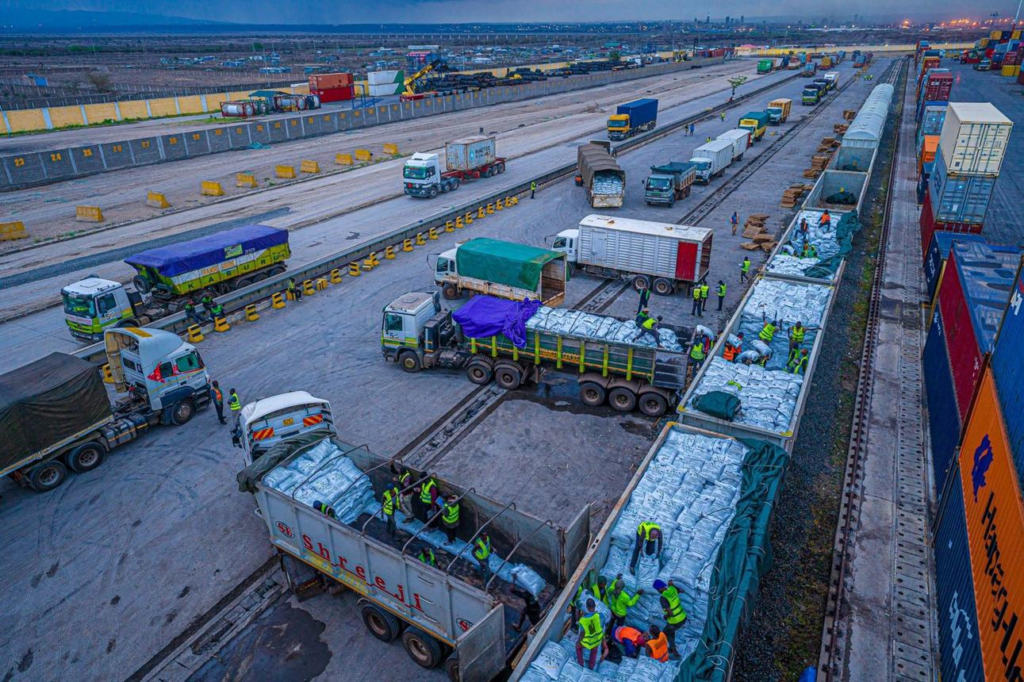
Multimodal logistics using rail freight and trucking services refers to a coordinated transportation system that combines rail and road transportation within one supply chain process.
Unlike single-mode transportation, multimodal solutions allow cargo to move through different transportation networks while maintaining better control over timing, costs, and delivery requirements.
Typically, the transportation process includes several stages:
| Stage | Transportation Mode | Main Function |
|---|---|---|
| Origin Pickup | Trucking | Collect cargo from supplier facilities |
| International Transport | Rail Freight | Move cargo across countries or continents |
| Terminal Handling | Rail Terminal Operations | Transfer and release cargo |
| Final Delivery | Trucking | Deliver cargo to final destination |
Furthermore, this transportation model reduces dependence on one logistics channel. Consequently, companies can improve shipment reliability even when certain transportation networks experience congestion or capacity limitations.
Common Cargo Suitable for Rail-Truck Solutions
| Cargo Type | Reason for Using Multimodal Transport |
|---|---|
| Automotive Components | Requires stable delivery schedules |
| Industrial Equipment | Needs flexible final delivery |
| Electronics | Requires controlled handling |
| Retail Inventory | Benefits from predictable replenishment |
| Renewable Energy Equipment | Suitable for large-volume shipments |
Therefore, multimodal transportation is widely used by manufacturers, distributors, and international traders seeking a more flexible logistics structure.
Why Do Companies Choose Multimodal Logistics Using Rail Freight and Trucking Services?
Businesses select multimodal transportation because it provides advantages that individual shipping methods cannot always achieve.
Lower Transportation Costs
Rail freight generally offers lower costs compared with air transportation, especially for large-volume shipments.
Moreover, trucking only handles shorter distances between terminals and final destinations. As a result, companies can reduce overall transportation expenses without sacrificing delivery performance.
Faster Transit Than Ocean Freight
Although ocean shipping remains economical, long transit times can create inventory pressure.
Therefore, rail and trucking combinations are often selected for businesses that need faster replenishment cycles while maintaining reasonable costs.
Greater Supply Chain Flexibility
Additionally, multimodal transportation provides more route options.
For example, if one rail corridor experiences delays, logistics providers can adjust trucking arrangements or alternative routes to maintain shipment schedules.
Comparison of Different Transportation Modes
| Transportation Mode | Cost Level | Transit Speed | Best For |
|---|---|---|---|
| Air Freight | High | Fastest | Urgent shipments |
| Ocean Freight | Low | Slow | Large non-urgent cargo |
| Rail Freight | Medium | Moderate | Cross-border cargo |
| Rail + Trucking | Medium | Moderate-Fast | Door-to-door delivery |
Consequently, multimodal logistics using rail freight and trucking services provides a practical solution for companies that require both efficiency and reliability.
How Can Businesses Build an Effective Rail and Trucking Logistics Strategy?

Successful multimodal transportation requires careful coordination before cargo begins its journey.
Plan Transportation Routes in Advance
First, companies should analyze available rail routes, terminal locations, and final delivery requirements.
For instance, selecting a rail terminal close to the final destination can significantly reduce trucking distance and related costs.
Coordinate Customs Clearance With Transportation
Meanwhile, customs procedures should be planned together with transportation schedules.
If customs clearance is delayed after rail arrival, trucks may need to wait, creating additional storage or waiting charges.
Therefore, importers should prepare:
| Required Document | Purpose |
|---|---|
| Commercial Invoice | Confirm transaction details |
| Packing List | Verify cargo information |
| Bill of Lading | Confirm transportation details |
| HS Code Information | Support customs classification |
| Import Documents | Complete customs procedures |
Select the Right Trucking Solution
Additionally, the final delivery method should match cargo requirements.
| Cargo Requirement | Recommended Trucking Solution |
|---|---|
| Standard Cargo | Regular Trailer |
| High-Value Products | Dedicated Truck |
| Heavy Machinery | Heavy-Haul Vehicle |
| Oversized Cargo | Special Transport Trailer |
| Multi-Destination Delivery | Distribution Trucking |
Furthermore, real-time tracking systems help businesses monitor cargo movement across rail and road networks.
As a result, companies can react quickly to delays and maintain better supply chain visibility.
What Challenges Can Multimodal Logistics Solve in International Shipping?
Although international transportation networks continue to improve, businesses still face various logistics challenges. However, multimodal logistics using rail freight and trucking services provides practical solutions by combining different transportation advantages.
Reducing Delays During International Transportation
Many importers experience delays because a single transportation mode cannot always adapt to changing conditions.
For example, ocean freight schedules may be affected by port congestion, while air freight capacity can become limited during peak seasons. Therefore, combining rail freight with trucking creates a more flexible transportation option.
Moreover, businesses can select alternative rail routes and adjust final delivery plans when unexpected issues occur.
Improving Final-Mile Delivery Efficiency
Rail networks are highly effective for long-distance transportation. Nevertheless, most warehouses and factories are not directly connected to rail terminals.
Consequently, trucking services become essential for completing the final transportation stage.
| Challenge | Multimodal Solution |
|---|---|
| Remote Delivery Locations | Flexible Trucking Networks |
| Limited Rail Coverage | Door-to-Door Transportation |
| Terminal Waiting Time | Pre-Booked Truck Capacity |
| Urgent Inventory Needs | Faster Final Delivery |
Supporting Different Cargo Requirements
Additionally, different industries require different transportation solutions.
Heavy machinery, medical equipment, retail inventory, and industrial materials often have unique delivery requirements. Therefore, combining rail and trucking allows logistics providers to customize transportation plans based on cargo characteristics.
As a result, businesses can achieve better control over delivery timing, transportation costs, and cargo security.
Real Multimodal Logistics Cases Using Rail Freight and Trucking Services
🚆 Project Card 1: Pharmaceutical Equipment Delivery to Spain
📍 Route: Suzhou, China → Madrid, Spain → Valencia, Spain
📦 Cargo: Laboratory Pharmaceutical Equipment
⏱️ Transit Time: 22 Days Rail + 1 Day Dedicated Truck Delivery
💰 Cost: Approximately 35% Lower Than Air Freight Alternative
🚄 Mode: China-Europe Railway + Temperature-Controlled Trucking
🛃 Customs Clearance Details:
The shipment required accurate product classification, medical equipment documentation verification, and coordinated customs clearance before terminal release.
✅ Outcome:
Equipment arrived before the scheduled laboratory installation date without additional storage costs.
Overview:
A pharmaceutical company needed to transport sensitive laboratory equipment for a new research facility in Valencia. However, air freight costs exceeded the project budget. Therefore, the company selected rail transportation for the international segment and arranged dedicated temperature-controlled trucking for final delivery. As a result, the shipment achieved a balance between cost efficiency and delivery reliability.
🚆 Project Card 2: Solar Energy Components Delivered to Greece
📍 Route: Xi’an, China → Thessaloniki, Greece → Athens, Greece
📦 Cargo: Solar Panel Mounting Systems and Energy Equipment
⏱️ Transit Time: 20 Days Rail + 2 Days Truck Delivery
💰 Cost: Around 28% Savings Compared With Air Transport
🚄 Mode: Rail Freight + Regional Truck Distribution
🛃 Customs Clearance Details:
The logistics team prepared HS code verification, commercial documentation checks, and import declaration support before cargo arrival.
✅ Outcome:
The project maintained the planned construction schedule for a solar installation site.
Overview:
A renewable energy contractor required multiple shipments of solar equipment for a large-scale installation project. However, direct air transportation was too expensive for the shipment volume. Consequently, rail freight was selected for the main transportation stage, while trucks completed delivery from the Thessaloniki terminal to the construction location. Furthermore, coordinated customs preparation reduced potential clearance delays.
🚆 Project Card 3: Automotive Production Materials Delivered to Turkey
📍 Route: Changsha, China → Istanbul, Turkey → Bursa, Turkey
📦 Cargo: Automotive Interior Components
⏱️ Transit Time: 19 Days Rail + 1 Day Truck Delivery
💰 Cost: Approximately 30% Lower Than Express Transportation
🚄 Mode: International Rail Freight + Factory Delivery Truck
🛃 Customs Clearance Details:
The shipment required supplier documentation review, import declaration preparation, and coordination with Turkish customs procedures.
✅ Outcome:
Production materials arrived according to the factory’s manufacturing schedule.
Overview:
An automotive supplier needed consistent deliveries to a manufacturing facility in Bursa. However, unpredictable transportation delays could interrupt production planning. Therefore, the company adopted a rail-and-truck solution with scheduled terminal pickup and factory delivery. As a result, the supply chain achieved improved stability and predictable arrival times.
Rail Freight and Trucking Cost Information for Multimodal Transportation
The cost of multimodal transportation depends on several factors, including cargo type, destination, route distance, customs requirements, and final delivery arrangements.
Estimated Transit Time Comparison
| Transportation Solution | Average Transit Time | Cost Level | Suitable For |
|---|---|---|---|
| Air Freight | 3–7 Days | High | Urgent Cargo |
| Ocean Freight | 30–45 Days | Low | Large Volume Cargo |
| Rail Freight + Trucking | 15–30 Days | Medium | Balanced Speed and Cost |
Main Factors Affecting Multimodal Shipping Costs
| Factor | Cost Impact |
|---|---|
| Cargo Weight | Determines transportation capacity |
| Cargo Dimensions | Affects truck selection |
| Rail Route | Influences base freight cost |
| Truck Delivery Distance | Changes final-mile expenses |
| Customs Complexity | May increase service requirements |
| Seasonal Demand | Affects transportation availability |
Moreover, companies can often reduce total logistics expenses by planning rail transportation and trucking together instead of booking each service separately.
Therefore, professional logistics planning is essential for achieving predictable pricing.
Conclusion
Multimodal logistics using rail freight and trucking services provides businesses with a reliable way to balance transportation costs, delivery speed, and supply chain flexibility.
While rail freight offers efficient long-distance transportation, trucking services complete the final delivery process and provide access to locations beyond rail networks. Moreover, this combined approach helps companies reduce transportation risks, improve inventory planning, and maintain more stable international supply chains.
Therefore, businesses shipping between Asia and Europe can benefit from integrating rail and trucking solutions into their logistics strategy. With proper route planning, customs coordination, and transportation management, multimodal logistics can become a long-term solution for efficient global shipping.
🚛Ready to optimize your international rail and trucking operations?
FAQs
1. Is multimodal logistics cheaper than using only air freight?
Yes. Rail and trucking combinations usually provide lower costs than air freight while maintaining faster transit times than ocean transportation.
2.How long does multimodal rail and truck transportation usually take?
Transit time depends on origin, destination, and customs procedures. Most Asia-Europe shipments require approximately 15–30 days.
3. Can multimodal logistics handle oversized or special cargo?
Yes. Specialized trucks, heavy-haul equipment, and customized transportation plans can support oversized, heavy, or sensitive shipments.
4. What documents are required for rail and trucking shipments?
Common documents include commercial invoices, packing lists, transport documents, HS codes, and customs declarations.
5. How should companies choose a multimodal logistics provider?
Companies should evaluate rail network coverage, trucking capabilities, customs experience, shipment visibility, and previous industry experience.