

- By Jaxin
- August 12, 2026
- Amazon FBA
Introduction
A rail shipment does not end when the container leaves the railway terminal. For many importers, the real logistics challenge begins at the final destination: customs clearance, unloading, local trucking, warehouse appointments, and delivery to the consignee all need to be coordinated. That is why choosing a rail freight company offering door delivery can simplify international cargo transportation.
Instead of arranging rail transportation, customs, and final-mile trucking separately, businesses can work with one logistics provider that manages the shipment from the supplier to the final delivery location.
This approach is especially useful for manufacturers, distributors, ecommerce businesses, and commercial importers that need predictable delivery rather than terminal-to-terminal transportation.
Moreover, door delivery can provide better visibility over the entire logistics process. The customer knows who is responsible for each stage, while the freight company can coordinate transportation schedules more efficiently.
This guide explains how door-to-door rail freight works, what services a reliable provider should offer, and how businesses can choose the right rail logistics partner.

What Does A Rail Freight Company Offering Door Delivery Provide?
A rail freight company offering door delivery manages the complete transportation chain instead of stopping at the railway terminal.
In practice, this can involve several transportation stages. Cargo may be collected from a supplier, moved to a rail terminal, transported internationally by rail, cleared through customs, and then delivered by truck to the final address.
Core Door Delivery Services
| Service | Business Benefit |
|---|---|
| 🚚 Supplier Pickup | Collects cargo directly from the origin |
| 📦 FCL & LCL | Supports different shipment volumes |
| 🚆 Rail Transportation | Handles the main international journey |
| 🛃 Customs Support | Coordinates clearance procedures |
| 🏢 Warehousing | Provides consolidation or temporary storage |
| 🚛 Destination Trucking | Connects rail terminal with final address |
| 🚪 Door Delivery | Completes the shipment to the consignee |
Furthermore, a complete door delivery solution can reduce the number of logistics providers involved in one shipment.
Who Can Benefit From Door Delivery?
This service can be useful for:
- Manufacturers
- Importers
- Distributors
- Ecommerce sellers
- Retail businesses
- Wholesale buyers
- Industrial projects
Therefore, businesses should look beyond the rail freight rate and evaluate the provider’s complete delivery capability.

How Does Door-To-Door Rail Freight Shipping Work?
Door delivery combines several logistics services into one transportation chain. Consequently, planning must begin before the cargo reaches the railway terminal.
1. Pickup From The Supplier
First, a truck collects the cargo from the factory, warehouse, or supplier address.
If multiple suppliers are involved, the cargo can be collected separately and moved to a consolidation warehouse.
2. Export Preparation
Next, the cargo is checked, packed, loaded, and prepared for export customs.
At this stage, accurate commercial invoices, packing lists, and other required documents help prevent avoidable delays.
3. Rail Transportation
After customs procedures are completed, the cargo moves to the rail terminal and begins the international rail journey.
During transportation, tracking updates allow the customer to monitor progress.
4. Destination Customs
Once the cargo arrives, import customs procedures are handled according to the destination requirements.
5. Final-Mile Trucking
After clearance, local trucking moves the cargo from the rail terminal, inland depot, or warehouse to the final delivery address.
6. Door Delivery
Finally, the shipment reaches the customer’s warehouse, factory, distribution center, or other agreed destination.
As a result, the customer does not need to separately arrange the transportation stages surrounding the railway journey.
Why Choose Door Delivery Instead Of Terminal-To-Terminal Rail?
Terminal-to-terminal rail can work well for businesses with their own local transportation resources. However, many importers prefer door delivery because it reduces the operational work required after the cargo arrives.
Fewer Logistics Handoffs
With separate providers, the importer may need to coordinate rail transportation, customs brokers, trucking companies, and warehouses independently.
By contrast, an integrated provider can manage these stages through one logistics plan.
Better Delivery Planning
Door delivery allows the transportation schedule to be planned around the final destination rather than stopping at the rail terminal.
For example, a warehouse can prepare receiving capacity before the cargo arrives.
Lower Coordination Burden
Instead of communicating with several service providers, the customer can work primarily with one logistics team.
More Flexible Final Delivery
A complete provider may arrange delivery to:
- 🏢 Warehouses
- 🏭 Factories
- 🛒 Distribution centers
- 📦 Ecommerce fulfillment centers
- 🏗 Project sites
Rail Door Delivery Compared With Other Options
| Transportation | Cost | Speed | Door Delivery |
| 🚢 Ocean | Lower | Slower | Available |
| 🚆 Rail | Moderate | Moderate-Fast | Available |
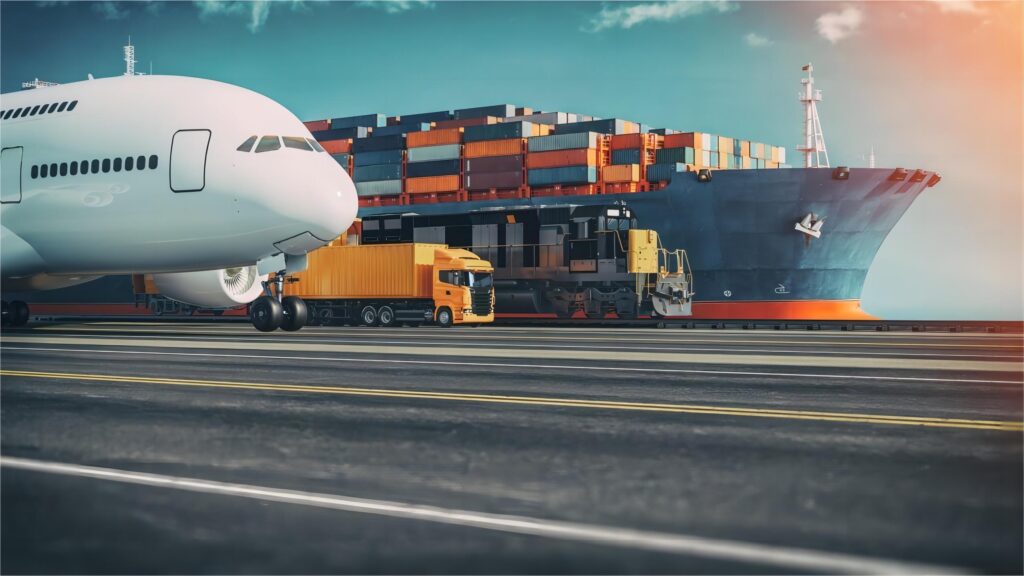
| ✈️ Air | Higher | Fastest | Available |
Therefore, rail door delivery can provide an attractive balance for shipments that require more speed than ocean freight without paying premium air freight costs.
How To Choose A Rail Freight Company Offering Door Delivery?
Not every rail freight provider can deliver directly to the final destination. Therefore, businesses should confirm the provider’s actual door delivery capabilities before booking.
Check The Origin Network
First, confirm whether the company can collect cargo from your supplier’s location and transport it to the appropriate rail terminal.
Review Rail Experience
A reliable provider should understand the relevant international rail routes and their operating requirements.
Confirm Customs Support
Because customs clearance affects the final delivery schedule, ask whether the provider can coordinate the required documentation and clearance process.
Evaluate Destination Trucking
Door delivery depends heavily on local trucking. Consequently, the provider should have reliable destination transportation resources.
Ask About Delivery Restrictions
Some warehouses and industrial facilities have specific delivery requirements, including:
- Delivery appointments
- Vehicle restrictions
- Unloading arrangements
- Receiving hours
- Special handling
Check Shipment Tracking
A good logistics provider should provide shipment updates from origin through final delivery.
| 🔍 What To Check | Why It Matters |
| 🚚 Origin Pickup | Connects supplier with rail |
| 🚆 Rail Experience | Supports reliable route planning |
| 🛃 Customs | Helps prevent clearance delays |
| 🚛 Destination Trucking | Enables final delivery |
| 📍 Tracking | Improves shipment visibility |
| 🚪 Door Delivery | Completes the logistics chain |
| 💬 Communication | Simplifies coordination |
Ultimately, the best provider should be able to explain the complete transportation process clearly before the shipment begins.
Real-World Rail Freight Company Offering Door Delivery Cases
🏭 Case 1: Factory-To-Factory Equipment Delivery
| 📌 Item | Details |
| 🚢 Route | China Manufacturing Plant → Overseas Factory |
| 📦 Cargo | Production Equipment |
| ⏱ Transit Time | 19 Days |
| 💰 Cost Impact | Lower than using dedicated air transportation |
| 🚆 Transport Method | Factory Pickup + Rail + Final-Mile Trucking |
| 🛃 Challenge | Equipment had to arrive before a production installation |
| 📝 Solution | Coordinated pickup, rail transportation, customs, and factory delivery |
| ✅ Result | Equipment arrived at the receiving factory according to schedule |
📦 Case 2: Commercial Cargo To A Distribution Warehouse
| 📌 Item | Details |
| 🚢 Route | China Supplier → Overseas Distribution Warehouse |
| 📦 Cargo | Consumer Products |
| ⏱ Transit Time | 15 Days |
| 💰 Cost Impact | Reduced fragmented transportation expenses |
| 🚆 Transport Method | Supplier Pickup + Rail + Customs + Trucking |
| 🛃 Challenge | Customer had no local trucking partner |
| 📝 Solution | Provided complete rail-to-warehouse delivery |
| ✅ Result | Cargo moved from supplier to warehouse under one logistics plan |
How Can Businesses Reduce Problems With Rail Door Delivery?
Door delivery becomes more reliable when the entire route is planned before the cargo departs.
First, provide the forwarder with the complete delivery address rather than only the destination city.
Next, provide accurate cargo information, including dimensions, weight, packaging, and handling requirements.
Then, confirm the receiving conditions at the destination.
Recommended Planning Process
Supplier → Pickup → Rail Terminal → Rail → Customs → Local Trucking → Final Door
Each stage should be considered before the shipment starts.
For example, if the final warehouse requires a delivery appointment, the destination trucking schedule should account for that requirement.
Likewise, if cargo is oversized or requires special unloading equipment, the forwarder should know this before arranging the final truck.
Information To Provide Your Forwarder
- 📍 Supplier address
- 📍 Final delivery address
- 📦 Cargo description
- ⚖️ Weight
- 📐 Dimensions
- 🚢 Container requirement
- 📅 Required delivery date
- 🏢 Warehouse or site restrictions
- 🛃 Customs requirements
Furthermore, businesses should request a quotation that clearly identifies the services included.
A low rail freight rate may not represent the lowest total logistics cost if trucking, customs, handling, or delivery charges are excluded.
Therefore, comparing the complete door-to-door cost provides a more accurate basis for choosing a provider.
Conclusion
A rail freight company offering door delivery can simplify international cargo transportation by connecting railway services with customs, trucking, and final-mile delivery.
Instead of managing several logistics providers separately, businesses can use one coordinated transportation solution from the supplier’s location to the final warehouse, factory, distribution center, or project site.
Moreover, door delivery provides more than convenience. It can improve shipment visibility, simplify communication, and make final delivery planning easier.
For importers and commercial businesses that want a balance between transportation cost and delivery speed, rail-to-door shipping can provide a practical alternative to relying entirely on ocean or air freight.
The key is choosing a provider with genuine capabilities across the entire logistics chain. Rail experience, origin pickup, customs support, destination trucking, tracking, and final delivery should all be evaluated before booking.
With the right logistics partner, businesses can move beyond terminal-to-terminal transportation and build a more complete, predictable, and manageable rail freight solution.
🤝 Ready For Rail Freight Delivered To Your Door?
Send us your cargo origin, destination, volume, and delivery requirements. We can evaluate the complete route and arrange a suitable rail-to-door solution.
FAQs
1. Can rail freight be delivered directly to a warehouse?
Yes. Rail transportation can be combined with destination trucking to deliver cargo directly to a warehouse or other final address.
2. Does door delivery include customs clearance?
It can. An integrated rail-to-door service may include customs coordination, although the exact scope depends on the shipment and destination.
3. Can rail freight provide door delivery for FCL cargo?
Yes. FCL containers can be transported by rail and then delivered by truck from the destination terminal to the final address.
4. Can LCL cargo also receive door delivery?
Yes. LCL cargo can be consolidated at origin and then transported by rail before being delivered to the final destination, subject to service availability.
5. What information is needed for a rail-to-door quotation?
The provider normally needs the origin, final delivery address, cargo type, weight, volume, container requirements, and preferred delivery schedule.