


- By Jaxin
- July 17, 2026
- Amazon FBA
Road freight connection from railway terminal to customer warehouse is a critical step in international rail logistics. Although rail freight efficiently transports cargo across long distances, shipments still require reliable final transportation from the railway terminal to the consignee’s warehouse.
Many importers focus on rail transit times but overlook the importance of terminal-to-warehouse delivery. However, poor coordination during this final stage can lead to cargo delays, storage fees, missed delivery appointments, and supply chain disruptions.
Fortunately, a well-planned road freight connection can ensure smooth cargo transfers, faster delivery performance, and better inventory management. This guide explores how businesses can optimize road freight connections after rail freight arrival and improve overall logistics efficiency.

Why Road Freight Connection from Railway Terminal to Customer Warehouse Matters
International rail freight rarely ends at the railway terminal. Therefore, road transportation becomes essential for completing the delivery process.
Without effective trucking arrangements, businesses may experience:
| Logistics Challenge | Potential Impact |
|---|---|
| Terminal Congestion | Additional storage charges |
| Delivery Delays | Inventory shortages |
| Poor Scheduling | Missed warehouse appointments |
| Limited Truck Capacity | Longer lead times |
| Communication Gaps | Shipment visibility issues |
Furthermore, rail terminals often have strict cargo pickup windows. Consequently, delays in arranging trucking services can generate unnecessary costs.
A reliable road freight connection helps maintain delivery schedules while reducing operational risks.
How Road Freight Connection Improves Railway Freight Distribution
The transition from rail transportation to road delivery directly impacts customer satisfaction and supply chain performance.
Faster Final Delivery
Trucking services provide direct transportation from the rail terminal to the customer warehouse. Therefore, cargo reaches its destination more efficiently.
Reduced Terminal Storage Costs
Prompt cargo pickup minimizes the risk of terminal detention and storage fees. As a result, logistics costs remain under control.
Improved Delivery Visibility
Modern trucking providers often offer GPS tracking and shipment updates. Consequently, businesses gain better visibility throughout the final delivery stage.
| Distribution Factor | Poor Coordination | Effective Road Freight Connection |
|---|---|---|
| Cargo Pickup Speed | Slow | Fast |
| Storage Charges | Higher | Lower |
| Delivery Reliability | Variable | Consistent |
| Shipment Visibility | Limited | Real-Time |
| Customer Satisfaction | Moderate | Improved |
Therefore, road freight should be considered an integral part of the rail freight process rather than a separate activity.
Which Services Are Included in Road Freight Connection from Railway Terminal to Customer Warehouse
Professional trucking providers offer a range of services that support efficient cargo distribution.
| Service | Purpose |
|---|---|
| Terminal Cargo Pickup | Transfer from rail terminal |
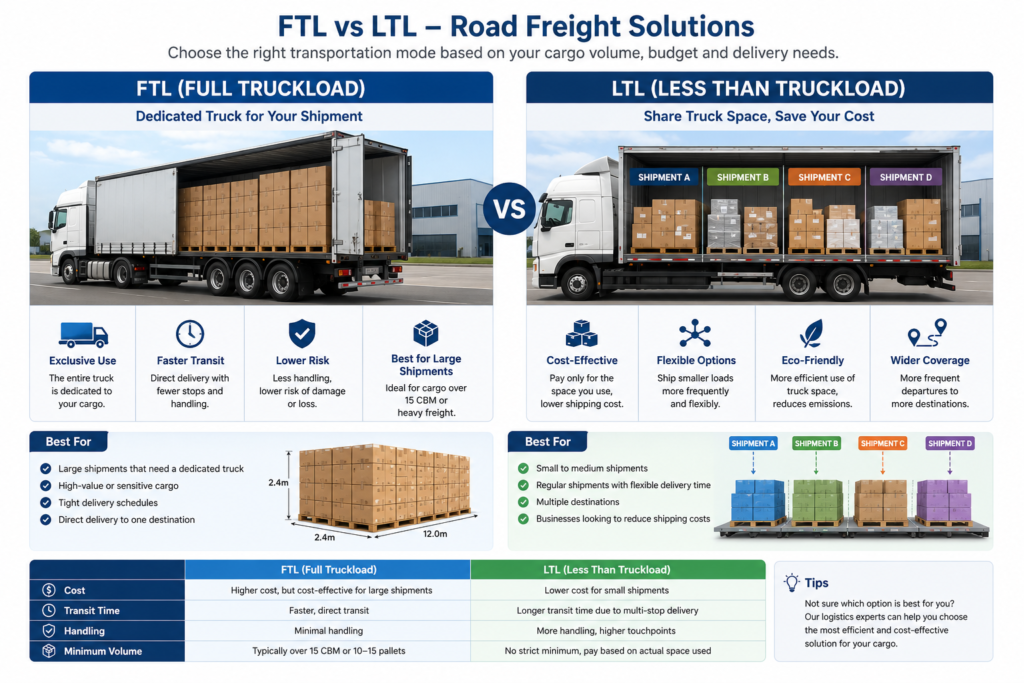
| Full Truckload (FTL) Delivery | Dedicated transportation |
| Less Than Truckload (LTL) Delivery | Cost-effective consolidation |
| Appointment Scheduling | Warehouse coordination |
| Cargo Tracking | Delivery visibility |
| Proof of Delivery | Shipment confirmation |
| Specialized Handling | Sensitive cargo support |
Full Truckload Delivery
FTL services are ideal for large shipments requiring direct transportation. Consequently, delivery times are often shorter.
Less Than Truckload Delivery
LTL services combine multiple shipments into one truck. Therefore, businesses can reduce transportation costs for smaller cargo volumes.
Appointment Management
Many customer warehouses require scheduled delivery appointments. Moreover, trucking providers help coordinate arrival times to avoid delays.
Case Study: Road Freight Connection from Railway Terminal to Customer Warehouse
🚚 Home Appliance Distribution in Germany
📍 Route: Xi’an, China → Duisburg Rail Terminal → Munich Warehouse
📦 Cargo: Small Home Appliances
⏱️ Transit Time: 17 Days Rail Transit + 1 Day Truck Delivery
💰 Cost Saving: 30% vs Air Freight Alternative
🚄 Mode: Rail Freight + Full Truckload Delivery
🛃 Road Freight Solution: Scheduled Terminal Pickup and Direct Warehouse Delivery
✅ Outcome: On-Time Delivery with No Terminal Storage Charges
Overview:
The importer required rapid cargo transfer after rail arrival. Therefore, trucking services were scheduled before the train reached the terminal. As a result, cargo was collected immediately and delivered directly to the warehouse.
🖥️ Consumer Electronics Delivery in France
📍 Route: Chengdu, China → Lyon Rail Terminal → Paris Distribution Center
📦 Cargo: Consumer Electronics Accessories
⏱️ Transit Time: 18 Days Rail Transit + 12 Hours Truck Delivery
💰 Cost Saving: 25% Lower Inland Transportation Costs
🚄 Mode: Rail Freight + Regional Trucking Network
🛃 Road Freight Solution: Multi-Destination Delivery Planning
✅ Outcome: Improved Inventory Availability Across Multiple Locations
Overview:
The customer operated several regional warehouses. Consequently, cargo was consolidated at the terminal and distributed through a coordinated trucking network, improving delivery efficiency.
⚙️ Automotive Parts Delivery in Poland
📍 Route: Wuhan, China → Warsaw Rail Terminal → Customer Warehouse
📦 Cargo: Automotive Components
⏱️ Transit Time: 19 Days Rail Transit + Same-Day Delivery
💰 Cost Saving: 22% Lower Distribution Expenses
🚄 Mode: International Rail Freight + Dedicated Trucking
🛃 Road Freight Solution: Real-Time Tracking and Appointment Coordination
✅ Outcome: Zero Delivery Delays
Overview:
The manufacturer required precise delivery scheduling to support production activities. However, terminal congestion created potential delays. Therefore, pre-arranged trucking and appointment management ensured smooth delivery execution.
How to Plan Road Freight Connection Before Rail Freight Arrival
Effective planning begins before the train reaches the destination terminal.
Confirm Cargo Availability
Businesses should monitor rail transit progress and confirm estimated arrival times. Consequently, trucking resources can be scheduled accurately.
Reserve Truck Capacity Early
Truck availability can become limited during peak shipping periods. Therefore, early booking helps avoid transportation delays.
Coordinate Warehouse Appointments
Customer warehouses may require advance scheduling. Moreover, appointment confirmation reduces unloading delays.
| Planning Step | Recommended Action |
|---|---|
| Rail Tracking | Monitor shipment status |
| Truck Booking | Reserve capacity early |
| Cargo Release Coordination | Confirm customs clearance |
| Appointment Scheduling | Arrange warehouse delivery |
| Delivery Monitoring | Track final transportation |
Furthermore, proactive coordination minimizes disruptions throughout the delivery process.
What Risks Can Road Freight Connection Reduce After Rail Freight Arrival
Road freight connections help businesses manage several common logistics risks.
Terminal Congestion Risks
Cargo left at terminals for extended periods may incur storage fees. Therefore, timely pickup is essential.
Delivery Delay Risks
Unexpected trucking shortages can delay warehouse deliveries. Consequently, advance planning improves reliability.
Inventory Risks
Late deliveries may disrupt production schedules or inventory replenishment plans. Meanwhile, efficient trucking helps maintain inventory availability.
| Risk Category | Potential Impact | Road Freight Solution |
|---|---|---|
| Terminal Storage Fees | Higher Costs | Fast Cargo Pickup |
| Truck Capacity Shortages | Delivery Delays | Early Booking |
| Missed Appointments | Additional Charges | Delivery Coordination |
| Inventory Disruptions | Operational Delays | Reliable Transportation |
| Visibility Gaps | Poor Planning | Real-Time Tracking |
As a result, businesses can improve supply chain performance while reducing unnecessary costs.
How to Choose a Road Freight Partner for Railway Terminal Deliveries
Selecting the right trucking provider is essential for successful final-mile logistics.
Evaluate Terminal Experience
Providers familiar with railway terminals can often handle cargo collection more efficiently.
Review Fleet Capacity
The trucking company should offer sufficient vehicle availability for both standard and peak-season operations.
Assess Technology Capabilities
Modern providers typically offer:
- GPS tracking
- Electronic proof of delivery
- Real-time shipment updates
- Transportation management systems
Consider Geographic Coverage
Businesses serving multiple regions should select providers with extensive distribution networks.
| Selection Factor | Importance |
|---|---|
| Terminal Experience | High |
| Fleet Availability | High |
| Tracking Technology | High |
| Delivery Coverage | High |
| Appointment Management | Medium |
Ultimately, choosing a reliable trucking partner improves delivery performance and customer satisfaction.
Conclusion
Road freight connection from railway terminal to customer warehouse is a vital component of international rail logistics. By ensuring efficient cargo pickup, reliable trucking services, and coordinated warehouse deliveries, businesses can reduce delays and maintain smooth supply chain operations.
Moreover, effective road freight connections improve inventory availability, reduce terminal charges, and enhance overall delivery performance. Therefore, companies using international rail freight should prioritize strong terminal-to-warehouse transportation planning as part of their logistics strategy.
- Consult Ali China Freight Forwarding for the lowest quote. They will provide you with reliable, cost-effective service.
FAQs:
Q1.What is a road freight connection from railway terminal to customer warehouse?
It refers to trucking services that transport cargo from a rail terminal directly to the consignee’s warehouse after rail freight arrival.
Q2.Why is road freight important after rail transportation?
Railways typically cannot provide door-to-door delivery. Therefore, trucking completes the final transportation stage and ensures cargo reaches its destination.
Q3.How quickly should cargo be picked up from a rail terminal?
As soon as possible. Prompt pickup helps avoid terminal storage charges and reduces the risk of delivery delays.
Q4.Can road freight services handle multiple delivery locations?
Yes. Many trucking providers offer multi-stop distribution services for businesses serving several warehouses or customers.
Q5.What documents are required for terminal cargo pickup?
Common documents include rail waybills, cargo release notices, customs clearance documentation, and delivery instructions.