

China Europe rail freight pallet loading requirements play a critical role in ensuring cargo safety, customs compliance, and transportation efficiency throughout the rail journey. Improper pallet loading can lead to cargo damage, weight distribution problems, customs inspections, and even shipment rejection at rail terminals.
Moreover, different cargo types require different pallet configurations and securing methods. Therefore, understanding pallet standards before shipment departure can help businesses avoid costly delays and additional handling charges.
This guide explains the key pallet loading requirements for China-Europe rail freight and provides practical recommendations for exporters, importers, and logistics managers.

What Are China Europe Rail Freight Pallet Loading Requirements?
China-Europe rail freight operators impose loading standards to ensure cargo remains stable throughout long-distance transportation. Therefore, businesses must follow pallet specifications, weight limits, and securing requirements.
Why Are Pallet Loading Standards Important?
| Requirement | Purpose |
|---|---|
| Weight Distribution | Prevent cargo shifting |
| Cargo Stability | Reduce damage risk |
| Handling Efficiency | Faster loading and unloading |
| Customs Inspection Access | Simplify cargo checks |
| Container Safety | Prevent transportation incidents |
Moreover, proper pallet loading improves overall supply chain efficiency.
Which Pallet Types Are Commonly Used?
Additionally, the following pallet types are widely accepted:
- Euro Pallet (1200 × 800 mm)
- Standard Pallet (1200 × 1000 mm)
- Heat-Treated Wooden Pallet
- Plastic Pallet
- Metal Pallet
Therefore, selecting the correct pallet type is the first step toward compliance.
Why Do China Europe Rail Freight Pallet Loading Requirements Matter for Cargo Safety?
Cargo travels thousands of kilometers across multiple countries during rail transportation. Therefore, improperly loaded pallets face increased risks.
Common Risks of Incorrect Pallet Loading
| Problem | Potential Consequence |
|---|---|
| Uneven Weight Distribution | Cargo collapse |
| Weak Stretch Wrapping | Product damage |
| Excessive Pallet Height | Loading restrictions |
| Unsecured Cargo | Shipment movement |
Moreover, rail vibration and handling operations can amplify these risks.
How Can Businesses Improve Cargo Stability?
Additionally, companies should:
- Place heavier goods at the bottom
- Use high-quality stretch wrap
- Apply corner protectors
- Secure cargo with straps when necessary
Consequently, cargo remains stable during transit.
What Pallet Dimensions and Weight Limits Apply to China Europe Rail Freight?
Pallet dimensions directly affect container utilization and cargo safety. Therefore, businesses should follow recommended specifications.
Recommended Pallet Standards
| Specification | Recommended Limit |
|---|---|
| Pallet Width | 800–1200 mm |
| Pallet Length | 1200 mm |
| Maximum Height | 1800 mm |
| Maximum Pallet Weight | 1000–1500 kg |
Moreover, specific limits may vary depending on rail operator and cargo type.
How Can Weight Distribution Be Optimized?
Furthermore, businesses should distribute cargo evenly across the pallet surface.
As a result, pallets are easier to handle and less likely to shift during transport.
How Should Cargo Be Secured on Pallets for Rail Transportation?
Proper securing methods are essential for meeting china europe rail freight pallet loading requirements and preventing cargo damage.
Recommended Cargo Securing Methods
| Method | Purpose |
|---|---|
| Stretch Wrapping | Stabilize cargo |
| Strapping | Prevent movement |
| Corner Protectors | Protect packaging |
| Anti-Slip Sheets | Increase friction |
| Shrink Wrapping | Additional security |
Moreover, combining multiple securing methods often provides better protection.
Best Practices for Secure Loading
Additionally:
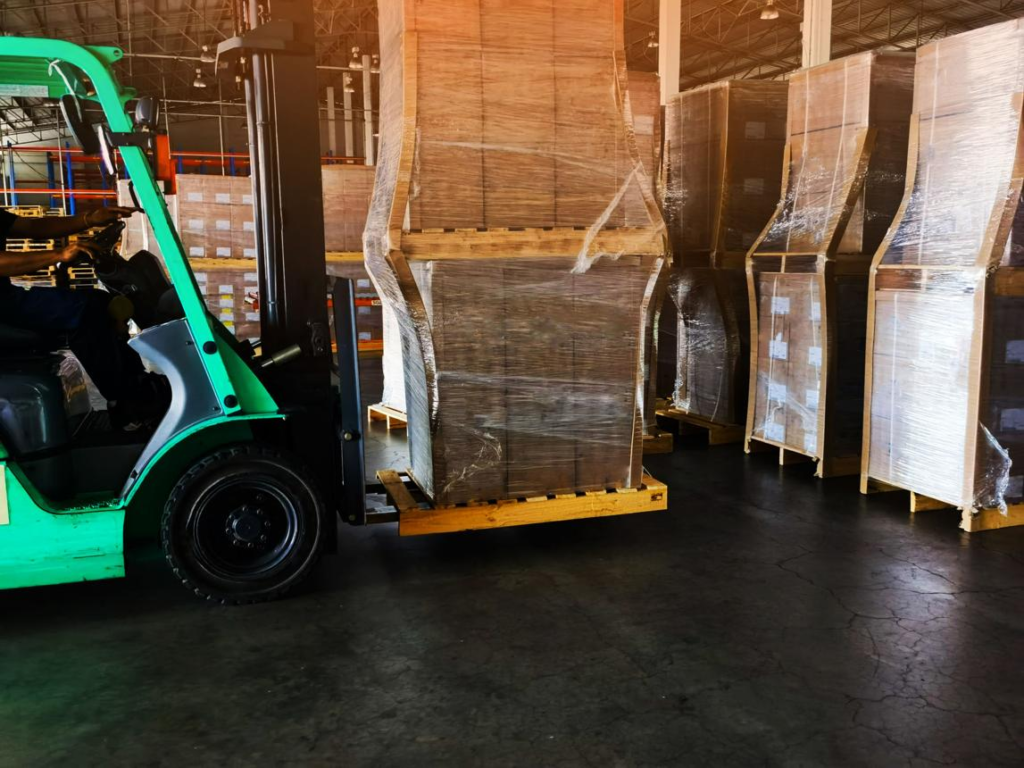
- Avoid pallet overhang
- Maintain balanced stacking
- Protect fragile products
- Test pallet stability before loading
Therefore, cargo can withstand long-distance transportation conditions.
How Can Proper Pallet Loading Reduce Customs and Inspection Delays?
Customs authorities may inspect rail cargo at border crossings and destination terminals. Therefore, pallet loading directly impacts inspection efficiency.
Common Customs Issues Related to Pallets
| Issue | Impact |
|---|---|
| Damaged Packaging | Additional inspection |
| Unclear Labeling | Verification delays |
| Non-Compliant Wooden Pallets | Customs rejection |
| Mixed Cargo Packaging | Longer inspections |
Moreover, customs officers need clear access to cargo information.
How Can Businesses Improve Inspection Readiness?
Additionally, companies should:
- Use ISPM 15-compliant wooden pallets
- Label pallets clearly
- Separate product categories
- Maintain accurate packing lists
Consequently, customs clearance becomes more efficient.
What Are the Best Practices for Container Pallet Loading in China-Europe Rail Freight?
Efficient container loading improves cargo protection and maximizes available space.
Container Loading Recommendations
| Practice | Benefit |
|---|---|
| Even Weight Distribution | Better container stability |
| Tight Cargo Arrangement | Reduced movement |
| Proper Aisle Space | Easier inspections |
| Pallet Alignment | Improved handling efficiency |
Moreover, optimized loading reduces transportation risks.
Loading Checklist
Additionally, verify:
- Pallet dimensions
- Weight compliance
- Cargo securing methods
- Label visibility
- Container floor condition
As a result, shipments are less likely to encounter operational issues.
Case Study: Complying with China Europe Rail Freight Pallet Loading Requirements
| Item | Details |
|---|---|
| Origin & Destination | Ningbo, China → Vienna, Austria |
| Cargo | Industrial machinery components |
| Transit Time | 19 days |
| Cost | Lower than equivalent air freight shipment |
| Transportation Method | China-Europe rail freight |
| Customs Clearance | ISPM 15-compliant pallets and pre-reviewed packing list |
| Brief Overview | Cargo was reconfigured onto standardized pallets before departure, improving container utilization and avoiding customs inspection delays. |
How Should Businesses Prepare Cargo to Meet China Europe Rail Freight Pallet Loading Requirements?
Preparation before shipment departure is often the most effective way to avoid transportation issues.
Pre-Shipment Checklist
- Confirm pallet dimensions
- Verify weight limits
- Use compliant wooden pallets
- Secure cargo properly
- Label shipments clearly
- Review packing documentation
Moreover, coordinating with freight forwarders before loading can help identify potential compliance issues.
Therefore, businesses that prepare carefully are more likely to achieve smooth transportation, faster customs processing, and lower risk of cargo damage.
Conclusion
China Europe rail freight pallet loading requirements are essential for maintaining cargo safety, maximizing container efficiency, and avoiding customs-related delays. Moreover, proper pallet selection, weight distribution, and cargo securing practices help reduce transportation risks throughout the rail journey.
By following established loading standards and working with experienced logistics providers, businesses can improve shipment reliability and ensure successful China-Europe rail freight operations.
- Consult Ali China Freight Forwarding for the lowest quote. They will provide you with reliable, cost-effective service.
FAQs
Q1.What pallet size is commonly used for China-Europe rail freight?
Euro pallets (1200 × 800 mm) and standard pallets (1200 × 1000 mm) are the most commonly accepted pallet sizes.
Q2.Are wooden pallets allowed in China-Europe rail freight?
Yes. However, wooden pallets must generally comply with ISPM 15 regulations and display the required treatment markings.
Q3.What is the maximum pallet height for rail freight cargo?
Most shipments should remain below approximately 1800 mm, although specific requirements may vary by route and operator.
Q4.How can I prevent cargo movement during rail transportation?
Use stretch wrap, strapping, corner protectors, and proper weight distribution to improve pallet stability.
Q5.Can improper pallet loading cause customs delays?
Yes. Damaged packaging, non-compliant pallets, poor labeling, and inaccessible cargo can all increase inspection and clearance times.