

- By Jaxin
- July 14, 2026
- Amazon FBA
Introduction
Rail freight alternative when ocean shipping is delayed is becoming an essential solution for importers, retailers, and manufacturers facing supply chain disruptions.Ocean freight delays can quickly lead to inventory shortages, production interruptions, and missed customer commitments.
Moreover, port congestion, vessel schedule changes, adverse weather conditions, and peak-season demand often extend ocean transit times beyond initial expectations. Therefore, businesses need a transportation alternative that balances speed, cost, and reliability.
This guide explains when rail freight is the best alternative to delayed ocean shipping and how businesses can use rail solutions to maintain supply chain continuity.
What Makes Rail Freight an Effective Alternative When Ocean Shipping Is Delayed?
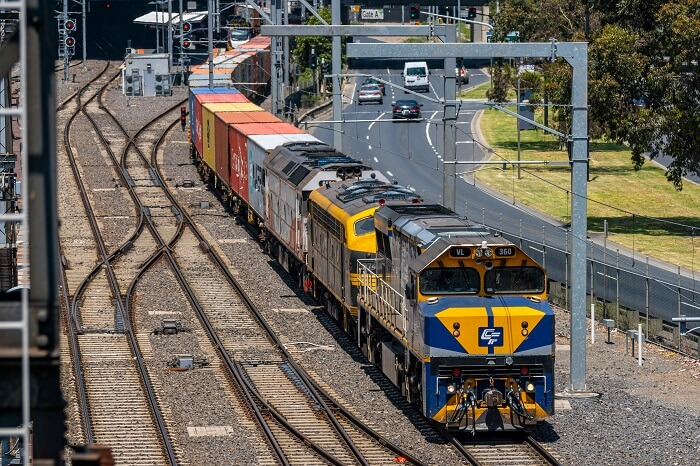
When ocean freight experiences disruptions, businesses often need a solution that delivers cargo faster without incurring the high costs of air freight.
Why Are Ocean Shipments Frequently Delayed?
| Common Cause | Impact |
|---|---|
| Port Congestion | Extended vessel waiting times |
| Peak Season Demand | Capacity shortages |
| Weather Disruptions | Schedule changes |
| Labor Strikes | Terminal slowdowns |
| Vessel Schedule Changes | Delivery uncertainty |
Moreover, ocean freight delays often affect downstream inventory planning and customer fulfillment.
Why Do Businesses Turn to Rail Freight?
Additionally, rail freight offers:
- Faster transit than ocean shipping
- More predictable schedules
- Reduced port dependency
- Better inventory replenishment speed
Therefore, rail freight has become a preferred contingency solution for many international shippers.
Why Is Rail Freight a Better Alternative When Ocean Shipping Is Delayed?
Transit time is often the biggest factor when businesses evaluate transportation alternatives.
| Transportation Method | Average Transit Time | Cost Level |
|---|---|---|
| Air Freight | 3–10 days | High |
| Rail Freight | 14–25 days | Medium |
| Ocean Freight | 30–45+ days | Low |
Moreover, when ocean freight is delayed by several weeks, rail freight can significantly shorten delivery timelines.
Key Advantages of Rail Freight
- Faster cargo movement
- Better schedule reliability
- Lower costs than air freight
- Reduced inventory risks
Consequently, businesses can maintain customer commitments and production schedules more effectively.
When Is Rail Freight the Better Choice?
Furthermore, rail freight becomes particularly attractive when cargo is time-sensitive but does not justify air freight costs.
As a result, many importers use rail freight to bridge supply chain gaps caused by ocean delays.
How Can Rail Freight Reduce Inventory Shortages Caused by Ocean Delays?
Inventory shortages are among the most expensive consequences of delayed ocean shipments. Therefore, businesses often seek alternative transportation before stock levels become critical.
Inventory Risks from Ocean Shipping Delays
| Risk | Business Impact |
|---|---|
| Stock Shortages | Lost sales opportunities |
| Production Interruptions | Manufacturing downtime |
| Missed Promotions | Reduced revenue |
| Customer Dissatisfaction | Lower service performance |
Moreover, longer replenishment cycles make inventory planning more difficult.
How Rail Freight Supports Inventory Recovery
Additionally, rail transportation enables:
- Faster inventory replenishment
- Improved stock availability
- Better demand response
- Reduced emergency shipping costs
Therefore, rail freight helps businesses recover inventory levels more quickly.
How Can Businesses Switch from Ocean Freight to Rail Freight Efficiently?
Switching transportation modes requires planning and coordination. However, experienced freight forwarders can simplify the transition process.
Key Steps for a Successful Modal Shift
| Step | Purpose |
|---|---|
| Cargo Assessment | Determine rail suitability |
| Route Planning | Identify optimal rail corridor |
| Documentation Review | Ensure customs compliance |
| Capacity Booking | Secure transportation space |
Moreover, businesses should evaluate delivery deadlines before making transportation decisions.
Best Practices for a Smooth Transition
Additionally:
- Book rail capacity early
- Confirm customs requirements
- Review cargo dimensions
- Coordinate warehouse receiving schedules
Consequently, shipments can move smoothly from supplier to destination.
How Does Rail Freight Compare with Air Freight as an Ocean Freight Alternative?
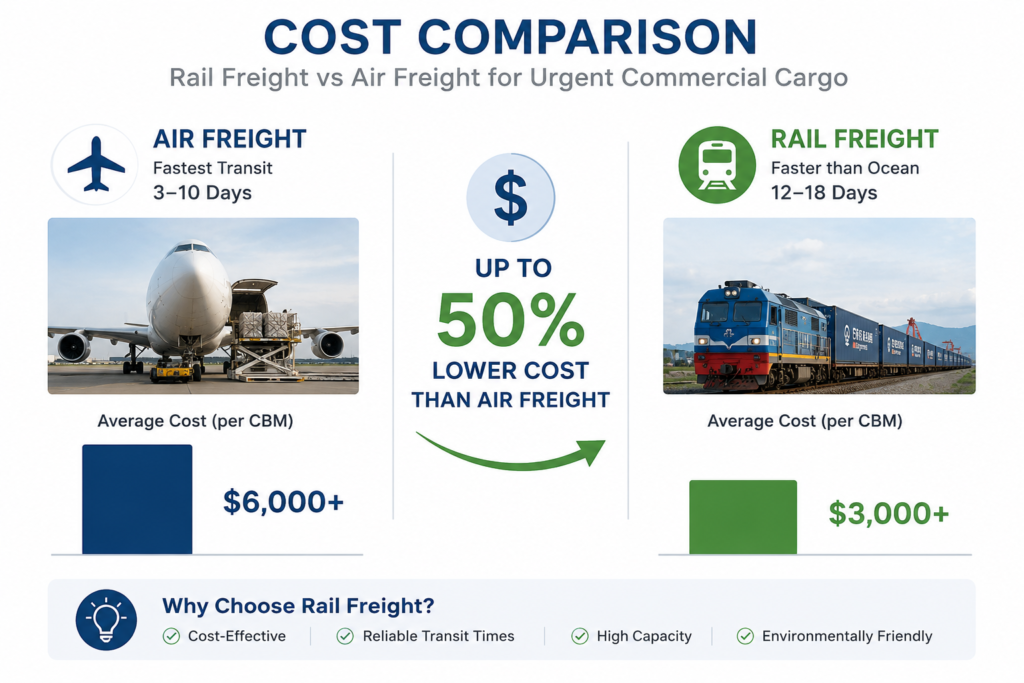
Many businesses consider both rail and air freight when ocean shipping is delayed. Therefore, understanding the differences is essential.
| Factor | Rail Freight | Air Freight |
|---|---|---|
| Transit Time | 14–25 Days | 3–10 Days |
| Cost | Medium | High |
| Capacity | High | Limited |
| Sustainability | Better | Lower |
Which Option Delivers Better Value?
For most urgent commercial cargo, rail freight provides a stronger balance between speed and cost.
Moreover, businesses can often save substantial transportation expenses compared with air freight.
Choosing the Right Alternative
Therefore, companies should evaluate:
- Delivery deadlines
- Cargo value
- Shipment volume
- Transportation budget
As a result, they can select the most cost-effective alternative.
Case Study: Rail Freight Alternative for Delayed Ocean Cargo
| Item | Details |
|---|---|
| Route | Qingdao, China → Lyon, France |
| Cargo | Home appliances |
| Transit Time | 19 days rail transit |
| Challenge | Ocean shipment delayed due to severe port congestion |
| Transportation Method | China-Europe rail freight |
| Customs Clearance | Documentation prepared before departure |
| Solution | Switched part of the shipment from ocean to rail |
| Result | Inventory arrived before a major retail promotion and avoided stock shortages |
Which Types of Cargo Benefit Most from Rail Freight Alternatives?
Not every shipment requires immediate air freight. Therefore, rail freight often provides an ideal balance for medium-urgency cargo.
Cargo Types Well-Suited for Rail Freight
| Cargo Type | Rail Freight Suitability |
|---|---|
| Retail Inventory | High |
| Consumer Electronics | High |
| Automotive Parts | High |
| Industrial Equipment | Medium-High |
| Home Products | High |
Moreover, rail freight supports both full-container and consolidated shipments.
When Should Air Freight Be Considered Instead?
Air freight may still be appropriate when:
- Delivery deadlines are extremely urgent
- Cargo value is very high
- Production stoppages are imminent
However, for many commercial shipments, rail freight offers sufficient speed at a significantly lower cost.
How Should Businesses Prepare for Future Ocean Freight Disruptions?
Supply chain disruptions are likely to continue affecting global transportation. Therefore, businesses should develop contingency plans before delays occur.
Risk Mitigation Strategies
- Diversify transportation options
- Build flexible inventory plans
- Monitor carrier performance
- Establish rail freight backup solutions
- Partner with experienced freight forwarders
Moreover, proactive planning improves supply chain resilience and operational flexibility.
Therefore, businesses that prepare in advance can respond more effectively when ocean shipping delays occur.
Conclusion
In today’s volatile logistics environment, a rail freight alternative when ocean shipping is delayed can help businesses maintain inventory levels, improve delivery reliability, and avoid costly disruptions.
Moreover, rail freight offers faster transit than ocean shipping while remaining significantly more cost-effective than air freight. By combining rail transportation, customs preparation, and professional logistics support, companies can keep cargo moving even when maritime supply chains face challenges.
Therefore, rail freight should be an essential part of every international shipper’s contingency strategy.
Need a reliable backup plan for delayed ocean shipments? Our rail freight specialists can help you identify the best rail freight alternative when ocean shipping is delayed and create a customized transportation strategy.
FAQs
1. Is rail freight faster than delayed ocean shipping?
Yes. Rail freight typically takes 14–25 days, while delayed ocean shipments may exceed 45 days depending on congestion and route conditions.
2. When should I switch from ocean freight to rail freight?
Businesses should consider rail freight when delivery deadlines are at risk, inventory levels are declining, or customer commitments could be affected.
3. Is rail freight cheaper than air freight?
Yes. Rail freight generally costs significantly less than air freight while still providing much faster delivery than ocean shipping.
4. What cargo is best suited for rail freight alternatives?
Retail inventory, electronics, automotive parts, industrial products, and consumer goods are commonly transported by rail when ocean delays occur.
5. Can freight forwarders help move cargo from ocean to rail?
Absolutely. Experienced freight forwarders can arrange rail capacity, customs clearance, route planning, and end-to-end transportation support.