

Introduction
Moving goods internationally from China requires more than selecting a railway route. International rail freight forwarding from China involves coordinating suppliers, containers, export customs, rail terminals, international transportation, destination clearance, and final delivery.
For manufacturers and overseas importers, this coordination becomes especially important when cargo needs to move faster than traditional ocean freight but does not justify the cost of air transportation. Rail can provide a practical middle option, particularly for commercial goods, industrial materials, machinery, and inventory replenishment.
However, the railway journey represents only one part of the shipment. Before departure, cargo must reach the appropriate rail terminal and complete export procedures. After arrival, import customs, local transportation, and delivery still need to be arranged.
Therefore, an experienced freight forwarder should look at the entire logistics chain rather than focusing only on the international rail segment.
This guide explains how international rail freight forwarding from China works, what services businesses need, and how to select a forwarding partner capable of managing the complete shipment.

What Does International Rail Freight Forwarding From China Include?
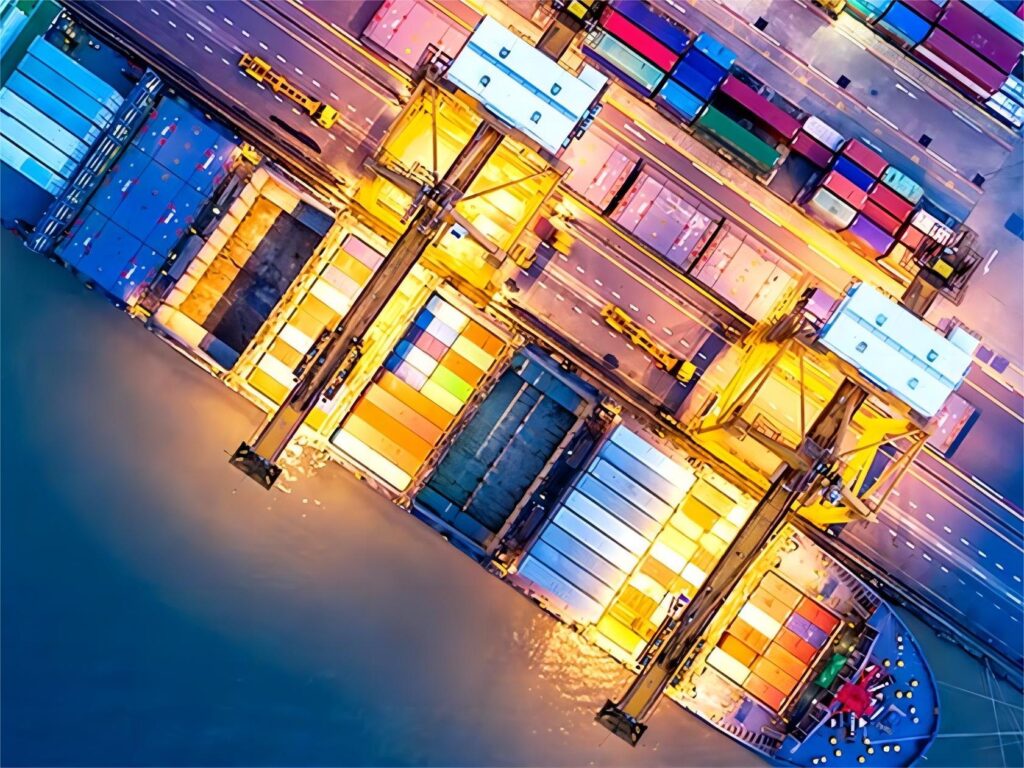
International rail freight forwarding connects cargo from a Chinese supplier with an overseas destination through a coordinated rail logistics process.
Unlike a simple rail booking, forwarding involves several supporting services before and after the main railway transportation.
Main Services
| Service | Purpose |
|---|---|
| 🚆 Rail Freight Booking | Arranges suitable rail transportation |
| 🚚 Origin Trucking | Moves cargo from supplier to rail terminal |
| 📦 FCL & LCL | Handles different shipment volumes |
| 🛃 Export Customs | Supports departure documentation |
| 🏢 Warehousing | Enables consolidation and cargo handling |
| 📍 Shipment Tracking | Provides transportation visibility |
| 🛃 Import Customs | Supports destination clearance |
| 🚪 Final Delivery | Connects rail with local trucking |
For example, a shipment may start at a factory in China, move by truck to a rail terminal, travel internationally by rail, complete destination customs procedures, and then continue by truck to the consignee.
Consequently, the freight forwarder’s role is to make these separate stages work together.
Cargo Suitable For International Rail
Rail forwarding can support:
- Machinery and equipment
- Electronics
- Automotive components
- Industrial materials
- Consumer products
- Commercial merchandise
- Ecommerce inventory
- Manufacturing supplies
Therefore, businesses should evaluate the complete forwarding capability instead of looking only at the advertised rail freight rate.
How Does International Rail Freight Forwarding From China Work?
A successful international rail shipment follows several connected stages. Therefore, careful coordination should begin before the cargo reaches the railway terminal.
1. Cargo Assessment
First, the forwarder reviews the commodity, weight, dimensions, volume, packaging, origin, destination, and delivery requirements.
This information helps determine the appropriate container and transportation method.
2. Supplier Pickup
Next, trucks collect the cargo from the factory or supplier. If several suppliers are involved, the cargo may first move to a consolidation warehouse.
3. Export Customs And Loading
Before departure, export documents are prepared and customs procedures are completed. Afterward, the cargo is loaded into the appropriate container.
4. International Rail Transportation
The container then moves through the selected rail network. During this stage, shipment tracking helps the importer monitor progress.
5. Destination Customs
Once the cargo reaches the destination, import customs procedures are handled according to local requirements.
6. Final Delivery
Finally, destination trucking moves the cargo from the rail terminal or warehouse to the consignee.
As a result, professional forwarding turns a complicated multi-stage journey into one coordinated logistics process.
Why Use A Freight Forwarder For International Rail Shipping From China?
Businesses can sometimes arrange individual transportation services themselves. However, international rail shipments often involve too many connected stages for fragmented management to remain efficient.
A freight forwarder can coordinate these activities under one logistics plan.
Key Advantages
🚆 Route Optimization
A forwarder can evaluate different rail options according to destination, cargo type, transit requirements, and budget.
📦 Container Coordination
Proper container planning helps businesses select FCL or LCL solutions according to shipment volume.
🛃 Customs Support
Documentation errors can interrupt an otherwise well-planned shipment. Therefore, customs coordination is an important part of the forwarding process.
🚚 Multimodal Transportation
Rail does not normally provide complete door-to-door transportation. Instead, trucking connects suppliers, rail terminals, warehouses, and final destinations.
📍 Shipment Visibility
Regular updates allow importers to prepare receiving schedules and inventory plans.
Rail Compared With Other Transportation Methods
| Factor | Rail | Ocean | Air |
| Cost | Moderate | Lower | Higher |
| Speed | Moderate-Fast | Slower | Fastest |
| Capacity | High | Very High | Limited |
| Best For | Balanced shipments | Large non-urgent cargo | Highly urgent cargo |
Therefore, rail can be particularly useful when businesses need a better balance between transportation speed and cost.
How To Choose An International Rail Freight Forwarder In China?
Not every freight forwarder has the same level of international rail expertise. Consequently, businesses should evaluate operational capabilities before selecting a provider.
Check Rail Experience
First, confirm that the provider regularly handles international rail cargo from China and understands the routes relevant to your destination.
Review FCL And LCL Services
Shipment volumes can vary significantly. Therefore, a forwarder capable of handling both FCL and LCL provides greater flexibility.
Evaluate Trucking Resources
Origin and destination trucking are essential parts of international rail transportation. Reliable road connections can therefore have a direct impact on delivery performance.
Confirm Customs Capability
Ask whether the provider can support export and import customs procedures and whether documentation is reviewed before shipment departure.
Check Tracking And Communication
Shipment visibility is particularly important when cargo passes through multiple logistics stages.
Ask About Door-To-Door Service
If you want one logistics partner, confirm whether the provider can manage the complete journey from the Chinese supplier to the final overseas destination.
| 🔍 Evaluation Factor | What To Check |
| 🚆 Rail Experience | International route knowledge |
| 📦 Container Capability | FCL and LCL options |
| 🚚 Trucking | Origin and destination coverage |
| 🛃 Customs | Export and import support |
| 📍 Tracking | Shipment visibility |
| 🚪 Door-to-Door | Complete delivery capability |
| 💬 Communication | Response and update quality |
Ultimately, a strong freight forwarder should provide a complete transportation solution instead of simply selling rail capacity.
Real-World International Rail Freight Forwarding From China Cases
🏭 Case 1: Industrial Equipment For A Production Expansion
| 📌 Item | Details |
| 🚢 Route | China Manufacturing Plant → Overseas Production Facility |
| 📦 Cargo | Production Equipment |
| ⏱ Transit Time | 20 Days |
| 💰 Cost Impact | Lower than emergency air transportation |
| 🚆 Transport Method | Factory Pickup + Rail + Destination Trucking |
| 🛃 Challenge | Equipment needed to arrive before a scheduled production expansion |
| 📝 Solution | Coordinated pickup, container loading, customs, rail transportation, and final delivery |
| ✅ Result | Equipment reached the production facility according to the project schedule |
📦 Case 2: Commercial Inventory From Multiple Suppliers
| 📌 Item | Details |
| 🚢 Route | Multiple China Suppliers → Overseas Distribution Warehouse |
| 📦 Cargo | Commercial Products |
| ⏱ Transit Time | 17 Days |
| 💰 Cost Impact | Improved container utilization |
| 🚆 Transport Method | Supplier Pickup + Warehouse Consolidation + Rail |
| 🛃 Challenge | Different suppliers had different cargo-ready dates |
| 📝 Solution | Collected compatible cargo at a consolidation warehouse |
| ✅ Result | Multiple purchase orders moved under one coordinated shipment |
How Can Businesses Improve International Rail Shipping From China?
International rail freight becomes more effective when transportation decisions are based on the complete supply chain rather than the railway segment alone.
First, businesses should determine the actual delivery requirement. Not every shipment needs the fastest available transportation.
Next, cargo should be classified according to volume, urgency, value, and destination.
Recommended Planning Process
Cargo → Route → Container → Customs → Rail → Destination → Final Delivery
For large regular shipments, FCL rail transportation may provide better operational efficiency.
For smaller shipments, LCL consolidation can reduce the cost of unused container capacity.
Meanwhile, urgent inventory may benefit from rail combined with trucking or other multimodal services.
Furthermore, businesses should compare the total logistics cost, rather than looking only at the basic rail freight rate.
Additional expenses can include:
- Origin trucking
- Warehouse handling
- Customs
- Terminal charges
- Destination trucking
- Storage
- Final delivery
Therefore, a complete quotation provides a much clearer picture of the actual transportation cost.
Questions To Ask Your Forwarder
Before cooperation, ask:
- Which China rail routes do you regularly operate?
- Can you arrange factory pickup?
- Do you provide FCL and LCL rail services?
- Can you consolidate multiple suppliers?
- Do you support export and import customs?
- Can you arrange destination trucking?
- Do you provide door-to-door delivery?
- How is cargo tracked during transportation?
- Can you provide a complete quotation?
Consequently, businesses can select a forwarder based on total logistics capability rather than price alone.
Conclusion
International rail freight forwarding from China provides businesses with a practical way to connect Chinese suppliers with overseas markets while balancing transportation speed, cost, and capacity.
However, successful rail shipping depends on much more than the railway journey. Supplier pickup, container planning, export customs, international transportation, destination clearance, and final-mile delivery all contribute to the final result.
Therefore, businesses should choose a freight forwarder that can coordinate these stages as one integrated logistics process. FCL and LCL flexibility, customs knowledge, trucking resources, shipment tracking, and door-to-door capability can all make a significant difference.
For manufacturers, importers, distributors, and ecommerce businesses, rail can serve as an effective alternative to relying entirely on ocean or air freight.
With the right forwarding partner, companies can simplify China-to-overseas transportation, improve shipment visibility, and build a more flexible international supply chain.
🤝 Ready To Move Cargo From China By Rail?
Share your origin, destination, cargo type, volume, and preferred delivery time. Our team can evaluate the route and develop a complete rail forwarding solution.
FAQs
1. What is international rail freight forwarding from China?
It is a logistics service that coordinates rail transportation from China with supplier pickup, customs, containers, trucking, and final delivery.
2. Is rail freight cheaper than air freight?
Generally, rail freight costs less than air freight while offering faster transportation than many ocean services.
3. Can I ship both FCL and LCL cargo by rail?
Yes. Depending on the route and service availability, businesses can use either full-container or consolidated rail transportation.
4. Does international rail forwarding include customs clearance?
Customs support can be included in an integrated forwarding service, although specific procedures depend on the cargo and destination.
5. Can rail freight from China provide door-to-door delivery?
Yes. Rail can be combined with origin and destination trucking to provide a complete door-to-door transportation solution.