

- By Jaxin
- July 13, 2026
- Amazon FBA
Introduction
Why rail freight rates increased this month is a question many importers, exporters, Amazon sellers, and supply chain managers are asking. A sudden increase in transportation costs can significantly impact profit margins, inventory planning, and delivery schedules. Moreover, many businesses that rely on China-Europe rail freight are facing tighter budgets and more complex logistics decisions.
However, rail freight pricing rarely changes without reason. Capacity shortages, seasonal demand surges, infrastructure constraints, and geopolitical developments often work together to influence market rates. Therefore, understanding these factors can help shippers adjust their logistics strategies and reduce unexpected transportation expenses.
In this article, we will examine the main reasons behind recent rail freight price increases, compare transportation alternatives, and provide practical solutions for controlling logistics costs.
Why Rail Freight Rates Increased This Month Across International Corridors

Rail freight prices have risen on many Eurasian routes due to a combination of supply and demand pressures. Although individual corridors experience different challenges, several common factors are influencing the market.
Key Factors Behind Rising Rail Freight Rates
| Factor | Impact on Rates | Current Influence |
|---|---|---|
| Peak-season demand | High | Strong |
| Capacity shortages | High | Increasing |
| Border congestion | Medium | Moderate |
| Equipment imbalance | High | Significant |
| Fuel and operating costs | Medium | Stable |
| Geopolitical uncertainty | High | Significant |
Additionally, some exporters have shifted cargo from ocean freight to rail services because of schedule reliability concerns. As a result, rail networks are handling more bookings than usual.
Furthermore, train operators cannot rapidly expand capacity. Consequently, even a moderate increase in demand can trigger noticeable rate increases.
How Capacity Shortages Explain Why Rail Freight Rates Increased This Month
Limited rail capacity remains one of the most important explanations for current pricing trends.
When available train space becomes scarce, carriers prioritize confirmed bookings and higher-yield cargo. Meanwhile, late bookings often face surcharges or delays.
Common Causes of Capacity Constraints
- Increased export demand
- Container shortages
- Equipment repositioning delays
- Terminal bottlenecks
- Infrastructure maintenance projects
| Capacity Issue | Impact on Shippers |
| Fewer departures | Higher rates |
| Container shortages | Delayed bookings |
| Terminal congestion | Longer lead times |
| Equipment imbalance | Increased costs |
Therefore, companies that reserve space earlier generally achieve better pricing and improved schedule reliability.
How Capacity Constraints Affect Market Pricing
As train utilization rises, available slots become more valuable. Consequently, carriers can increase prices without significantly reducing demand.
Moreover, many forwarders secure space weeks in advance, leaving fewer options for last-minute shipments.
Why Rail Freight Rates Increased This Month During Peak Shipping Season
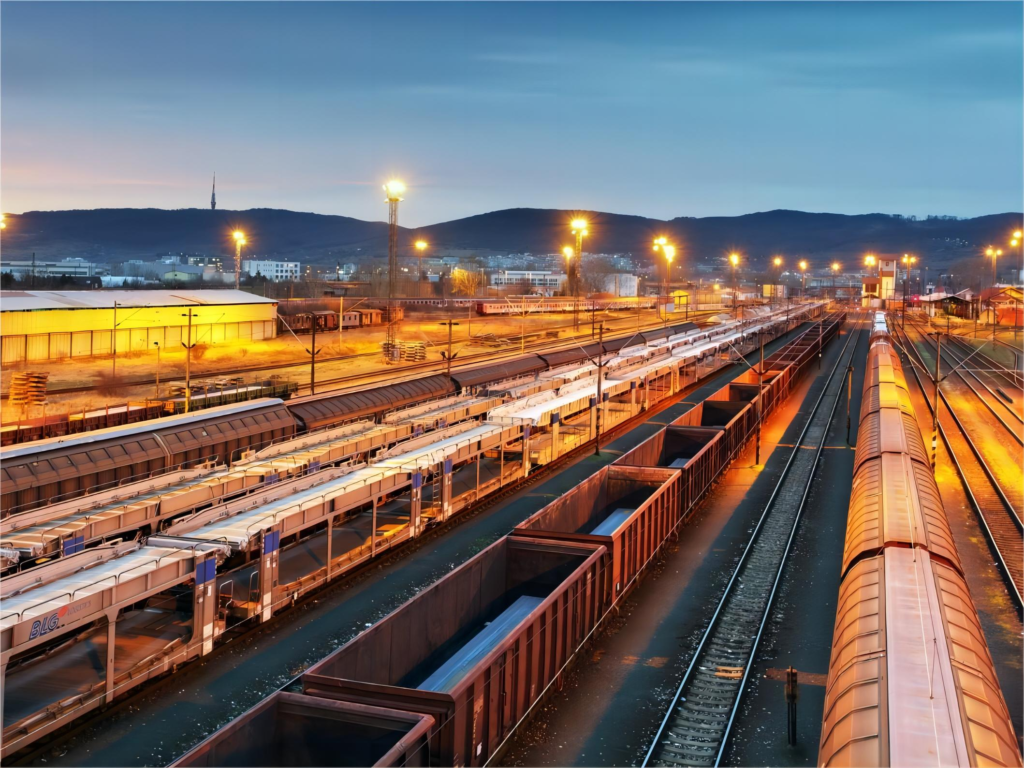
Seasonal demand has traditionally been a major driver of transportation costs.
During inventory replenishment periods, retailers, manufacturers, and e-commerce sellers increase shipments to prepare for upcoming sales cycles. Consequently, transportation demand often exceeds available capacity.
Industries Driving Current Rail Demand
| Industry | Demand Level |
| Consumer Electronics | Very High |
| E-commerce | High |
| Automotive Parts | High |
| Machinery | Medium |
| Industrial Equipment | Medium |
Additionally, many businesses are rebuilding inventory after previous supply chain disruptions.
Meanwhile, stronger cargo volumes create intense competition for rail space. As a result, freight providers can implement higher pricing structures.
| Season | Demand Level | Rate Trend |
| Jan–Mar | Moderate | Stable |
| Apr–Jun | Medium | Slight Increase |
| Jul–Sep | High | Rising |
| Oct–Dec | Very High | Peak Pricing |
Why Rail Freight Rates Increased This Month Because of Border Congestion
Efficient border operations are essential for international rail freight. However, border crossings often become bottlenecks when cargo volumes increase.
Customs inspections, gauge changes, security procedures, and documentation reviews can all extend transit times.
| Border Issue | Operational Impact |
| Customs inspections | Longer clearance |
| Gauge transfer operations | Additional handling |
| Security checks | Slower movement |
| Documentation errors | Cargo holds |
| Terminal queues | Departure delays |
Furthermore, several strategic crossings have experienced higher-than-normal traffic levels.
Consequently, trains spend more time waiting at terminals, reducing network efficiency and increasing operational costs.
How Delays Increase Transportation Expenses
- Reduced train utilization
- Additional equipment costs
- Higher terminal handling charges
- Lower overall network capacity
Therefore, even temporary congestion can affect pricing across multiple rail corridors.
What Cost Factors Are Behind Rising Rail Freight Rates This Month?
Beyond capacity and demand, several operational expenses contribute to higher transportation costs.
Railway operators continue facing inflationary pressure in labor, equipment, infrastructure, and compliance activities.
| Cost Category | Impact Level |
| Labor expenses | High |
| Equipment leasing | High |
| Energy costs | Medium |
| Infrastructure fees | Medium |
| Security compliance | Medium |
Additionally, railway companies are investing in long-term service improvements.
How Infrastructure Costs Drive Rising Rail Freight Rates
Many operators are funding:
- Terminal modernization
- Cargo visibility systems
- Digital tracking technology
- Security upgrades
Although these investments improve efficiency, they also increase short-term operating expenses.
Consequently, part of the current rail freight cost increase reflects ongoing infrastructure development.
Why Rail Freight Rates Increased This Month Compared With Ocean Freight
Many shippers compare transportation options before making logistics decisions.
The recent market environment has encouraged some businesses to shift cargo from ocean freight to rail services.
| Mode | Transit Time | Cost Level | Reliability |
|---|---|---|---|
| Air Freight | 3–7 Days | Very High | High |
| Rail Freight | 15–25 Days | Medium | High |
| Ocean Freight | 30–50 Days | Low | Medium |
| Trucking | 7–20 Days | Medium-High | High |
Why Businesses Are Choosing Rail
- Faster than ocean freight
- More affordable than air freight
- Better schedule predictability
- Lower inventory holding costs
Consequently, increased demand for rail services has placed additional pressure on available capacity.
Meanwhile, some ocean freight routes continue to experience schedule disruptions. As a result, rail becomes a preferred alternative despite rising prices.
Case Study: Managing Higher Rail Freight Costs During a Capacity Shortage
🚆 Case Card 1 – Electronics Importer Faced Capacity Shortages
| Item | Details |
| Origin | Chongqing, China → Duisburg, Germany |
| Cargo | Smart Home Devices |
| Transit Time | 19 Days |
| Cost Change | +18% Compared to Previous Month |
| Transportation Method | Rail Freight |
| Customs Clearance Details | Standard EU Import Clearance |
| Brief Overview | Peak-season demand reduced available train slots. The importer booked capacity three weeks earlier than usual and avoided additional spot-rate increases. |
🚆 Case Card 2 – Automotive Supplier Affected by Border Congestion
| Item | Details |
| Origin | Zhengzhou, China → Prague, Czech Republic |
| Cargo | Automotive Parts |
| Transit Time | 24 Days |
| Cost Change | +11% |
| Transportation Method | Rail + Truck Delivery |
| Customs Clearance Details | EORI Registration and Commercial Invoice Verification |
| Brief Overview | Increased inspections at a key border crossing created train backlogs. Although transportation costs increased, the customer avoided production disruptions through proactive inventory planning. |
🚆 Case Card 3 – E-commerce Seller Shifted From Air to Rail
| Item | Details |
| Origin | Wuhan, China → Madrid, Spain |
| Cargo | Consumer Electronics |
| Transit Time | 22 Days |
| Cost Change | +9% |
| Transportation Method | Rail Freight |
| Customs Clearance Details | DDP Service with Local Customs Processing |
| Brief Overview | Rising air freight prices encouraged a shift to rail transport. Despite moderate rail rate increases, total logistics expenses fell by nearly 40% compared with air shipping. |
How to Reduce Costs When Rail Freight Rates Increase This Month
Although market conditions cannot always be controlled, businesses can reduce the impact of rising transportation costs through better planning.
| Strategy | Potential Savings |
| Early booking | 5–15% |
| Shipment consolidation | 8–20% |
| Flexible schedules | 3–10% |
| Route optimization | 5–12% |
| Long-term contracts | 5–15% |
Practical Actions to Offset Rail Freight Rate Increases
- Reserve space 2–4 weeks in advance.
- Consolidate smaller cargo shipments.
- Compare multiple rail corridors.
- Monitor seasonal demand trends.
- Partner with experienced freight forwarders.
Furthermore, proactive planning helps businesses avoid expensive last-minute transportation decisions.
Consequently, companies that adopt these strategies often maintain better cost control during volatile freight markets.
Conclusion
Understanding why rail freight rates increased this month helps businesses make informed logistics decisions and avoid unexpected transportation expenses. Capacity shortages, peak season demand, border congestion, operating cost increases, and shifting market preferences have all contributed to higher rail freight pricing.
However, companies that book early, optimize shipping schedules, consolidate cargo, and work with experienced logistics providers can significantly reduce the impact of rising transportation costs. Therefore, proactive planning remains the most effective strategy for maintaining supply chain efficiency during periods of rate volatility.
Need help navigating why rail freight rates increased this month and finding cost-effective transportation solutions? Our rail freight specialists can analyze your shipping requirements, compare route options, and provide competitive freight quotations. Contact us today to optimize your logistics costs and secure reliable rail capacity.
FAQs
1. Why did rail freight rates increase this month so quickly?
Rail freight rates increased due to higher seasonal demand, limited train capacity, border congestion, and increased operating expenses. Additionally, many shippers shifted cargo from ocean freight to rail services.
2. Will rail freight prices decrease next month?
Prices depend on capacity availability, demand levels, and market conditions. However, rates may stabilize if congestion eases and booking volumes decline after the peak season.
3. Is rail freight still cheaper than air freight?
Yes. Rail freight remains significantly more affordable than air freight while providing faster transit times than ocean shipping. Therefore, it remains a popular middle-ground solution.
4. How can I reduce rail freight shipping costs?
Early booking, shipment consolidation, route optimization, and working with experienced freight forwarders can reduce transportation expenses and improve overall supply chain efficiency.
5. What documents are required for international rail freight?
Common requirements include a commercial invoice, packing list, bill of lading or rail waybill, customs declaration documents, and product-specific compliance certificates.