

- By Jaxin
- July 16, 2026
- Amazon FBA
Introduction
Rail freight transportation for construction material suppliers provides an efficient solution for companies moving large volumes of building materials across international markets. However, construction supply chains face unique challenges because materials such as steel, prefabricated components, and structural products are heavy, bulky, and often required according to strict project schedules.
Meanwhile, traditional shipping methods may create operational pressure. Ocean freight can involve unpredictable port delays, while road transportation becomes expensive for long-distance heavy cargo. Therefore, many construction material suppliers are adopting rail freight as a reliable option for improving delivery control and supporting large-scale projects.
This article explains how rail transportation helps construction suppliers manage project logistics, optimize material flow, reduce storage pressure, and improve international delivery performance.

Why Is Rail Freight Transportation for Construction Material Suppliers Suitable for Large Projects?
Construction projects require continuous material availability from the foundation stage to final installation. Therefore, transportation solutions must support large quantities, predictable schedules, and efficient handling.
Unlike consumer goods, construction materials are usually characterized by:
- High weight
- Large volume
- Long-term project demand
- Fixed delivery locations
- Strict construction timelines
Construction Materials Suitable for Rail Transportation
| Material Category | Rail Transportation Advantage |
|---|---|
| Steel Beams | High loading capacity for heavy products |
| Aluminum Profiles | Suitable for long-distance bulk shipment |
| Prefabricated Components | Supports scheduled project delivery |
| Building Panels | Reduces transportation pressure |
| Pipes and Structural Materials | Efficient for oversized cargo |
Furthermore, railway transportation is particularly suitable for international construction projects because it provides stable routes between manufacturing regions and destination markets.
Rail Freight Compared with Other Options
| Transportation Method | Best Application | Main Limitation |
|---|---|---|
| Road Freight | Short-distance delivery | Higher cost for long distances |
| Ocean Freight | Large-volume non-urgent cargo | Longer transit time |
| Rail Freight | International project materials | Requires route planning |
Consequently, construction companies can use rail freight to create a more predictable supply chain for complex projects.
How Can Construction Material Suppliers Use Rail Freight to Manage Peak Season Demand?
Construction industries often experience seasonal demand increases. For example, many infrastructure and commercial building projects accelerate during warmer months. Therefore, suppliers must prepare transportation plans before peak construction periods begin.
A strategic rail transportation approach allows suppliers to move materials earlier and maintain stable inventory levels.
Peak Season Challenges and Rail Solutions
| Challenge | Rail Freight Solution |
|---|---|
| Ocean capacity shortage | Alternative international transportation option |
| Rising freight prices | More stable long-distance rates |
| Project deadline pressure | Predictable transportation schedules |
| Limited warehouse space | Planned delivery timing |
Moreover, rail freight allows suppliers to divide large orders into scheduled shipments rather than delivering all materials at once.
Example Delivery Planning
| Project Stage | Required Materials | Recommended Delivery Timing |
|---|---|---|
| Foundation Stage | Steel structures and pipes | Early shipment |
| Building Framework | Panels and components | Scheduled rail arrival |
| Final Construction | Supporting materials | Flexible delivery |
Therefore, rail freight helps construction suppliers align transportation with actual project progress instead of simply storing large quantities at construction sites.
How Does Rail Freight Transportation for Construction Material Suppliers Improve Project Delivery Scheduling?
Construction delays often happen because materials arrive too early or too late. However, effective logistics planning can reduce these risks.
Rail freight transportation for construction material suppliers supports project-based delivery by providing more predictable transit windows and better shipment coordination.
Building Materials Delivery Timeline
| Project Timeline | Logistics Activity |
|---|---|
| Week 1–2 | Production and cargo preparation |
| Week 3 | Railway transportation begins |
| Week 4–5 | Customs clearance and terminal handling |
| Week 5+ | Final delivery to construction site |
Furthermore, suppliers can coordinate rail arrivals with construction milestones.
For example:
- Steel arrives before structural work begins
- Panels arrive before installation teams start
- Supporting materials arrive according to construction phases
Additionally, scheduled deliveries reduce unnecessary site congestion because contractors receive materials when they are actually needed.
Consequently, rail freight becomes more than a transportation method; it becomes part of the overall project management strategy.

What Loading Methods Are Used for Heavy Construction Materials by Rail?
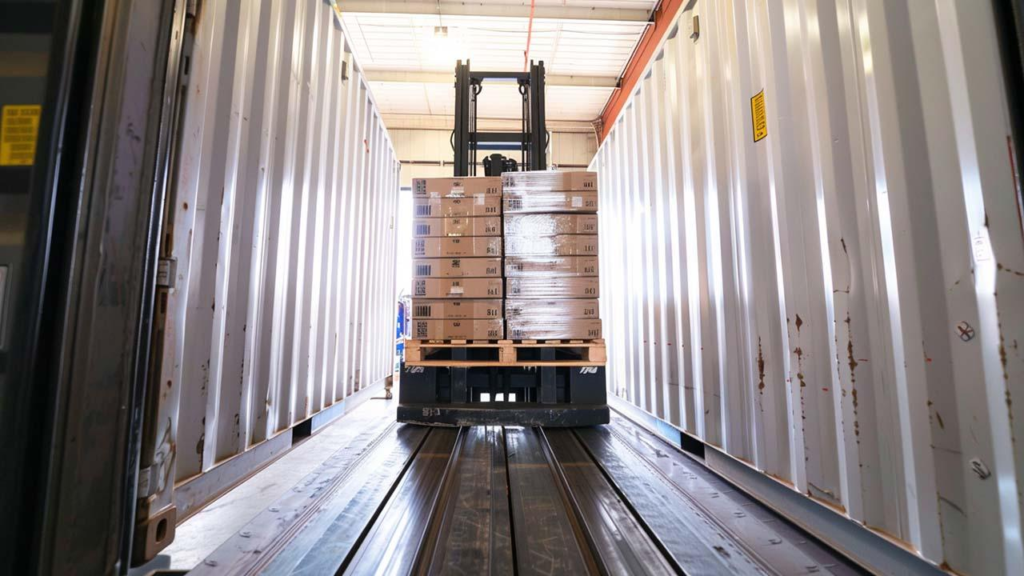
Heavy construction materials require specialized loading methods to ensure safety during transportation. Therefore, suppliers must select suitable equipment based on cargo dimensions, weight, and handling requirements.
Common Rail Loading Solutions
| Loading Method | Suitable Cargo | Advantage |
|---|---|---|
| Standard Container | Packaged building materials | Easy international handling |
| Flat Rack Container | Oversized structures | Supports large dimensions |
| Open Top Container | Tall cargo | Easier top loading |
| Bulk Rail Equipment | Heavy raw materials | Efficient for large quantities |
Moreover, professional loading plans help reduce cargo movement and prevent transportation damage.
Key Loading Considerations
Suppliers should evaluate:
- Cargo weight distribution
- Securing methods
- Packaging strength
- Terminal handling equipment
- Final unloading conditions
Furthermore, improper loading may create additional costs through damage claims or unloading delays.
Therefore, working with experienced logistics teams ensures construction materials are transported safely from origin factories to project locations.
How Can Rail Freight Transportation for Construction Material Suppliers Reduce Storage Pressure?
Construction sites often have limited storage capacity. Therefore, delivering too many materials too early can increase warehouse expenses and create operational difficulties.
A well-planned rail freight solution supports just-in-time construction logistics.
Traditional Delivery vs Planned Rail Delivery
| Approach | Result |
|---|---|
| Large Early Delivery | Higher storage pressure |
| Unplanned Shipments | Increased site congestion |
| Scheduled Rail Delivery | Better inventory control |
Moreover, rail freight allows suppliers to coordinate multiple shipments according to construction progress.
Benefits of Controlled Material Flow
| Benefit | Impact |
|---|---|
| Lower Storage Costs | Reduced warehouse requirements |
| Better Site Organization | Easier construction management |
| Less Material Handling | Lower damage risks |
| Improved Cash Flow | Less capital tied in inventory |
Additionally, suppliers can combine rail transportation with local trucking to achieve precise final delivery timing.
Consequently, construction companies can maintain smoother operations without excessive material storage.
What Customs and Documentation Issues Should Construction Material Suppliers Prepare For?
International construction material shipments often cross multiple borders. Therefore, accurate documentation is essential for avoiding clearance delays.
Common Required Documents
| Document | Purpose |
|---|---|
| Commercial Invoice | Defines cargo value |
| Packing List | Provides material details |
| Certificate of Origin | Supports import procedures |
| HS Code Information | Ensures correct classification |
| Transport Documents | Confirms shipment movement |
Common Customs Problems
| Problem | Impact |
|---|---|
| Incorrect Product Classification | Clearance delays |
| Missing Information | Additional inspections |
| Inaccurate Cargo Description | Customs questions |
| Unprepared Import Documents | Storage charges |
Furthermore, construction materials may have different import requirements depending on destination markets.
Therefore, suppliers should complete compliance checks before shipment departure.
Rail Freight Transportation for Construction Material Suppliers Case Study: Supporting a Commercial Building Project
Project Card
| Category | Details |
|---|---|
| Origin | Qingdao, China → Budapest, Hungary |
| Cargo | Steel structures and sandwich panels |
| Transit Time | 21 days rail transportation + 3 days local delivery |
| Cost | Optimized through scheduled shipments and container planning |
| Transportation Method | China-Europe Rail Freight + Truck Delivery |
| Customs Clearance Details | HS code verification, document review, import compliance preparation |
| Brief Overview | A construction material supplier needed regular deliveries for a commercial building project. The customer required reliable transportation while avoiding excessive storage at the construction site. |
How Should Construction Material Suppliers Select the Right Rail Freight Route?
Different construction projects require different transportation strategies. Therefore, route selection should consider destination location, cargo characteristics, and project deadlines.
Common Rail Freight Markets
| Route | Suitable Materials |
|---|---|
| China-Europe Rail | Steel, panels, industrial materials |
| China-Central Asia Rail | Infrastructure materials |
| China-Russia Rail | Heavy construction products |
Important Route Selection Factors
Suppliers should evaluate:
- Border crossing efficiency
- Railway capacity
- Terminal location
- Final delivery distance
- Project schedule requirements
Moreover, the cheapest route is not always the most effective option.
A slightly faster and more reliable route may reduce overall project costs by preventing construction delays.
Therefore, route planning should focus on total supply chain performance rather than only transportation price.
Conclusion
Rail freight transportation for construction material suppliers provides a reliable solution for companies managing heavy cargo, international projects, and complex delivery schedules. Moreover, it helps suppliers improve material planning, reduce storage pressure, and maintain better control over construction timelines.
By selecting suitable loading methods, optimizing delivery schedules, preparing customs documents, and choosing efficient railway routes, construction suppliers can build a stronger international logistics system.
For companies supporting global infrastructure and commercial development projects, rail freight offers a practical balance between capacity, reliability, and cost efficiency.
FAQs
Q1: What construction materials are suitable for rail freight transportation?
Rail freight is suitable for steel products, aluminum profiles, prefabricated components, pipes, panels, and other heavy or high-volume construction materials.
Q2: Can rail freight support large construction projects?
Yes. Rail transportation can handle repeated shipments for infrastructure projects, commercial buildings, and industrial developments with scheduled delivery plans.
Q3: How can suppliers avoid construction site storage problems?
Suppliers can use phased rail deliveries and coordinate transportation schedules with construction milestones to reduce unnecessary material storage.
Q4: Is rail freight cheaper than road transportation for construction materials?
For long-distance international shipments, rail freight is often more cost-effective because it provides higher capacity and lower transportation costs per unit.
Q5: What factors affect construction material rail freight transit time?
Transit time depends on route selection, customs procedures, cargo type, border efficiency, and final delivery distance.